Yesterday we decided to split up in the morning. Hayley took Xavier to a zoo while Felix and I went to a museum. We headed as a family to the Ueno Zoo entrance and parted ways. Felix and I wandered through Ueno Park to the Tokyo National Museum. The park is lovely and, since it is the weekend, was crowded with people enjoying the space. Felix and I saw a number of interesting and amusing things along the way.
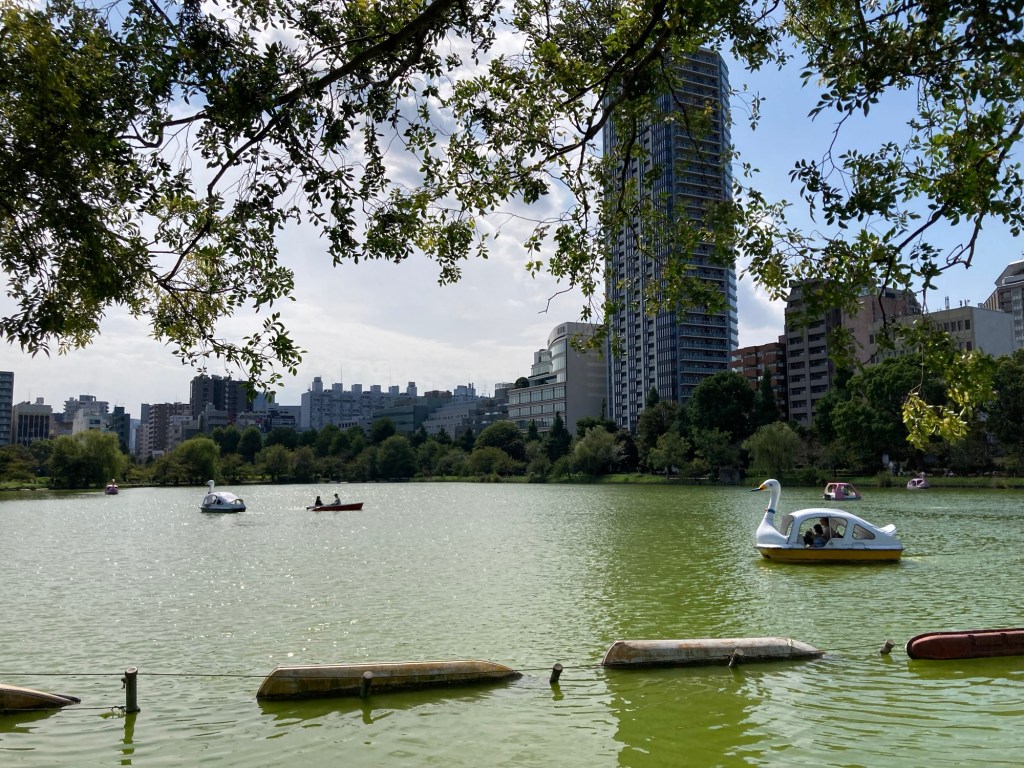
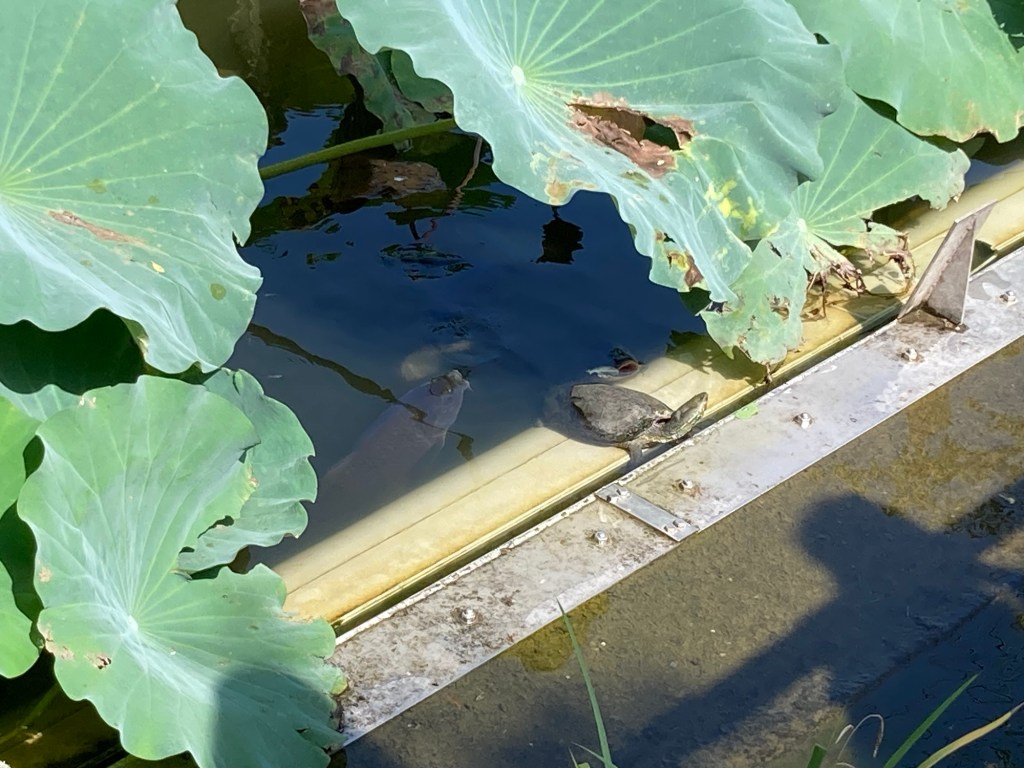
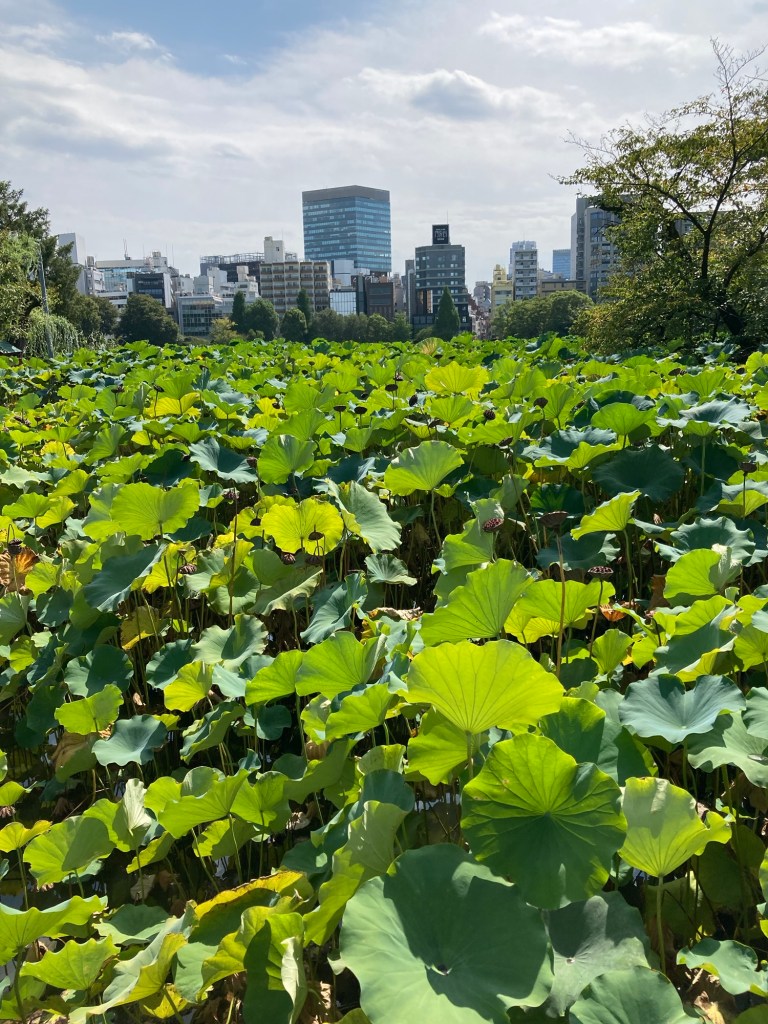
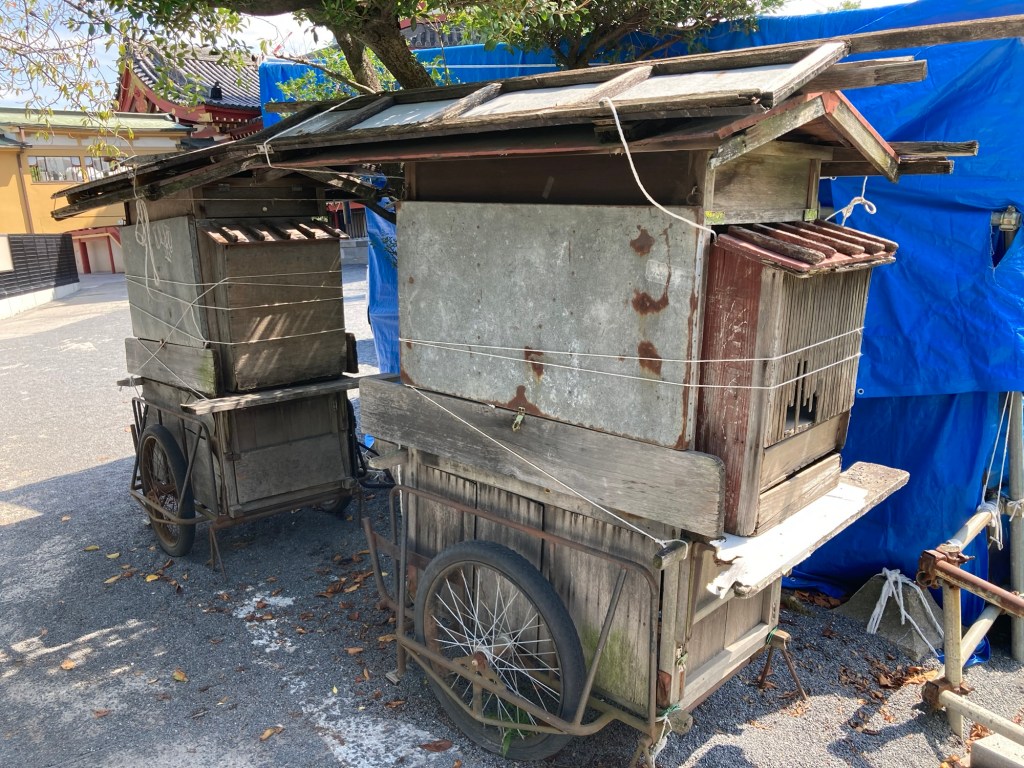

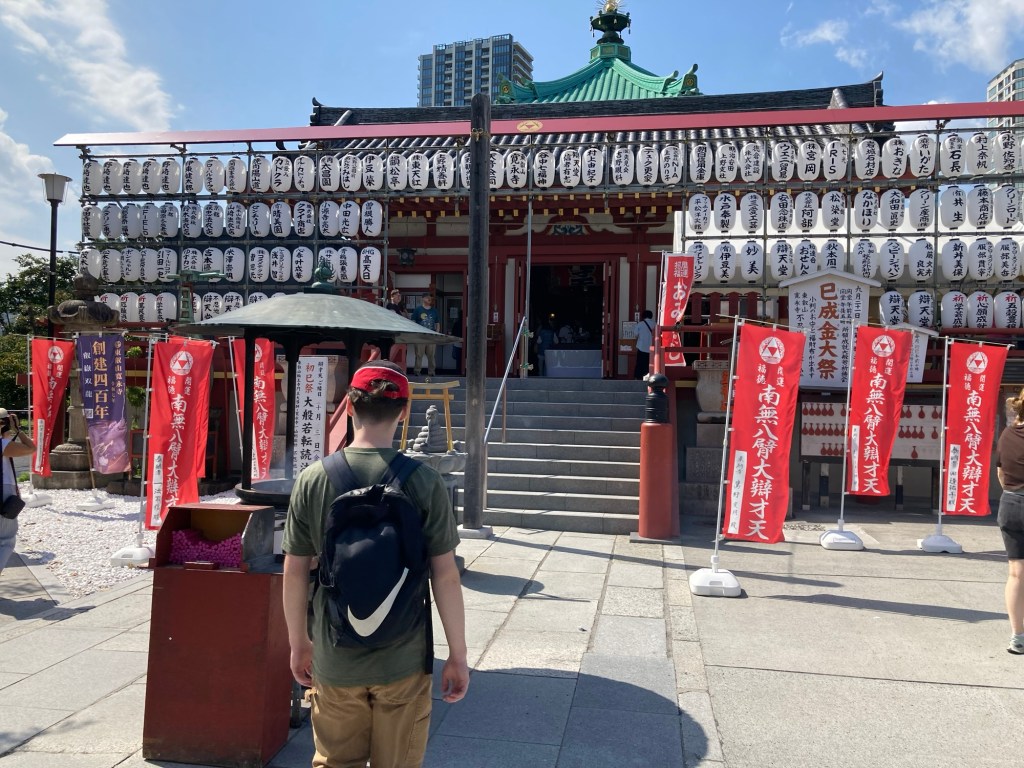
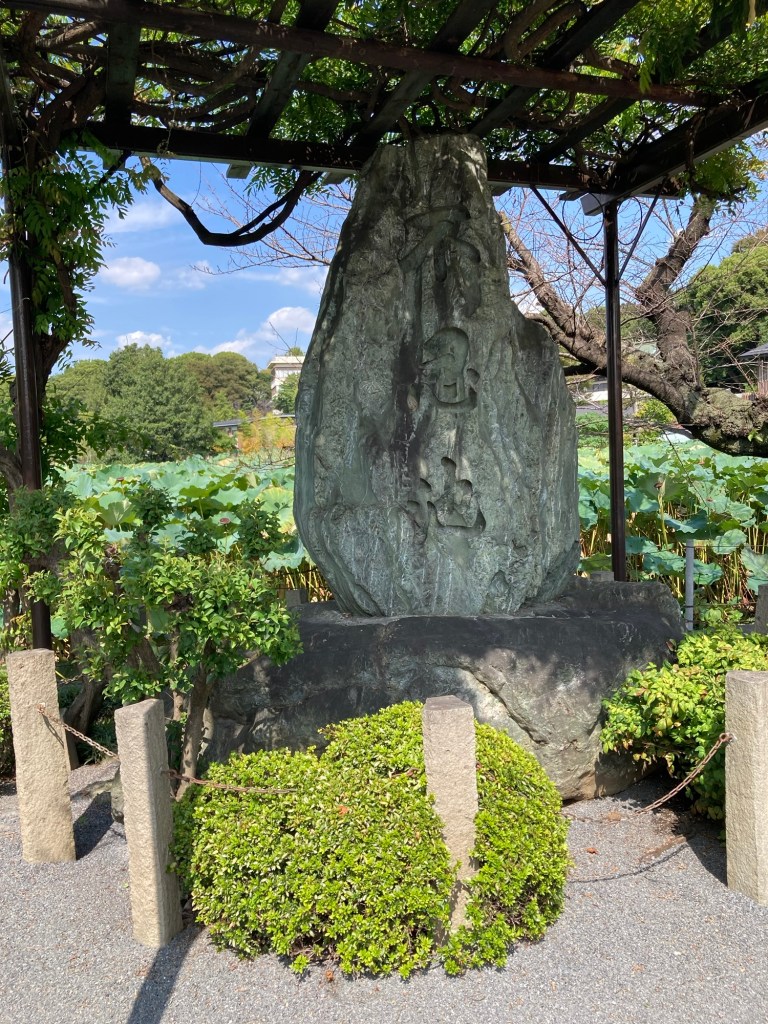
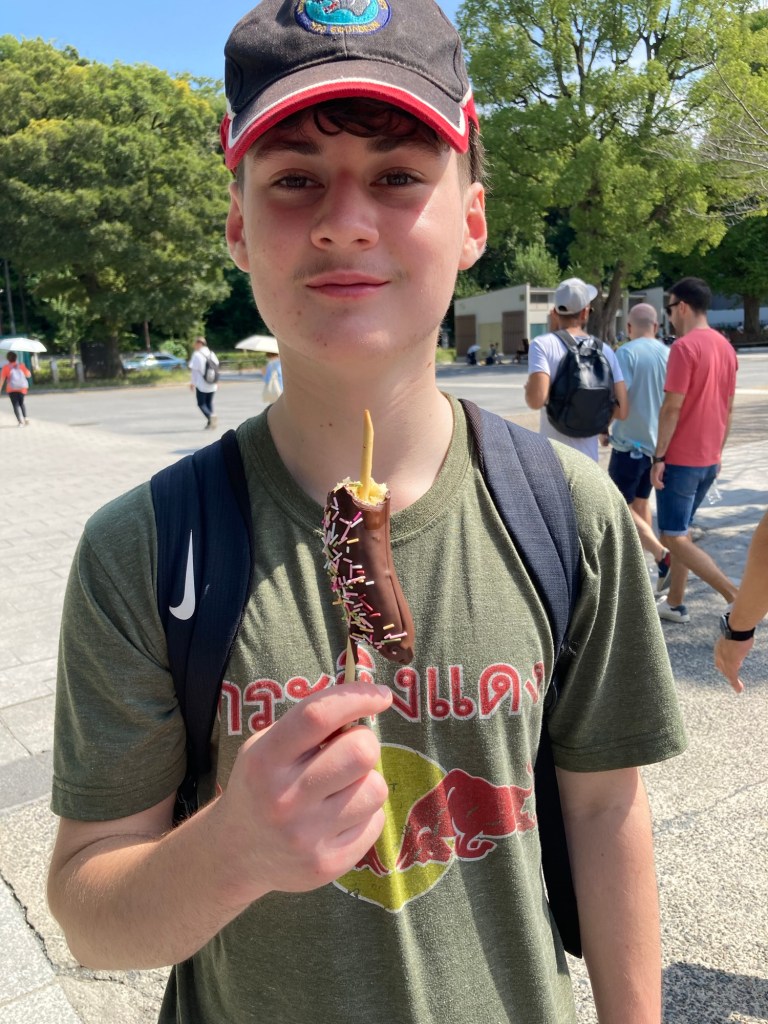
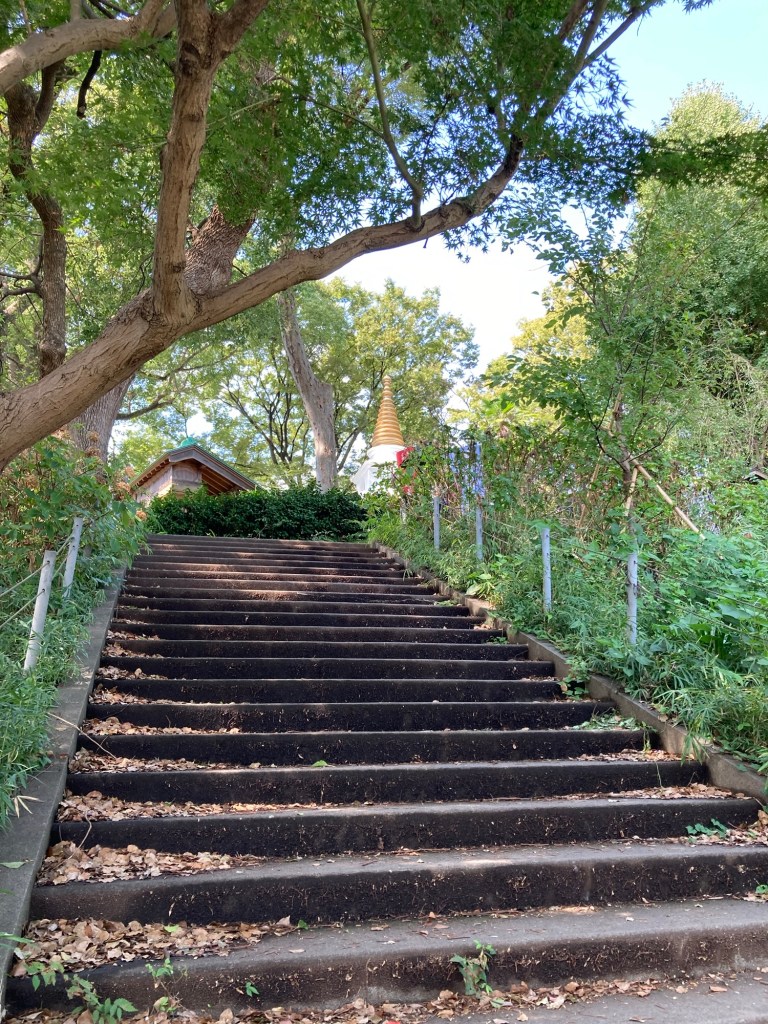
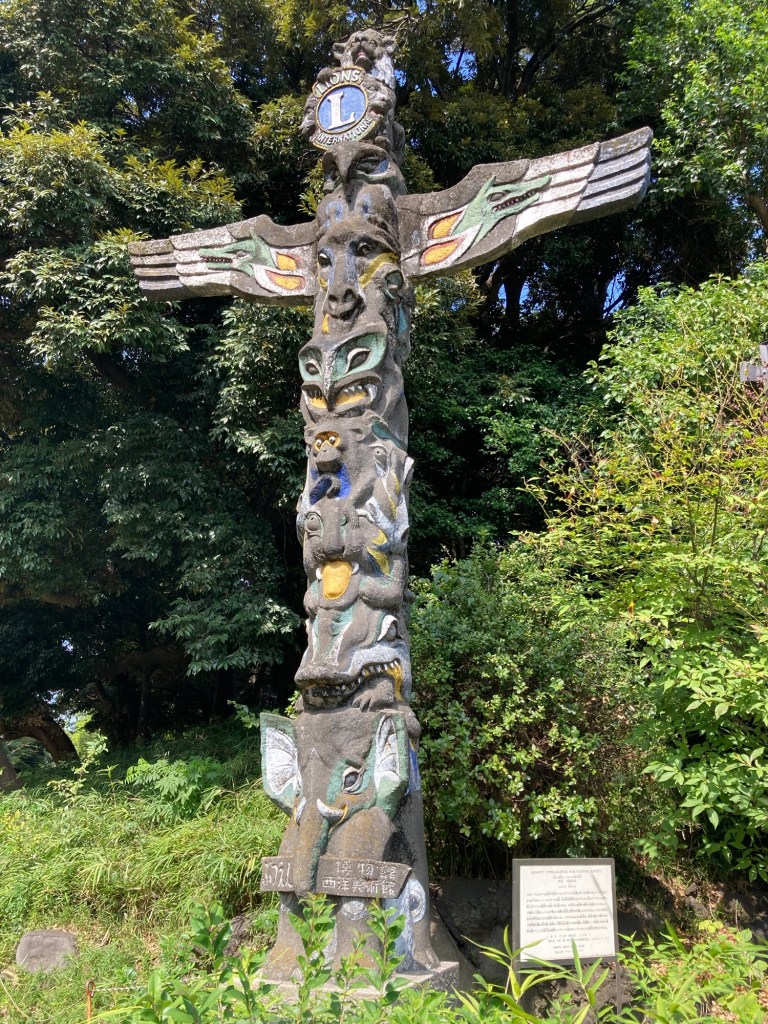
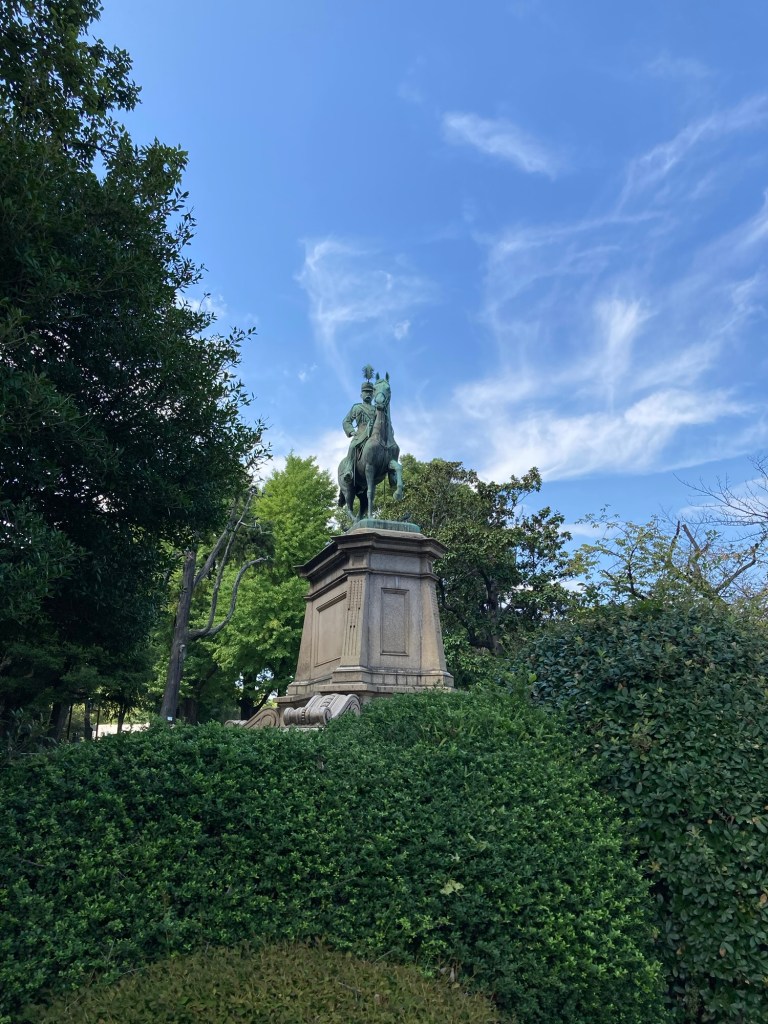
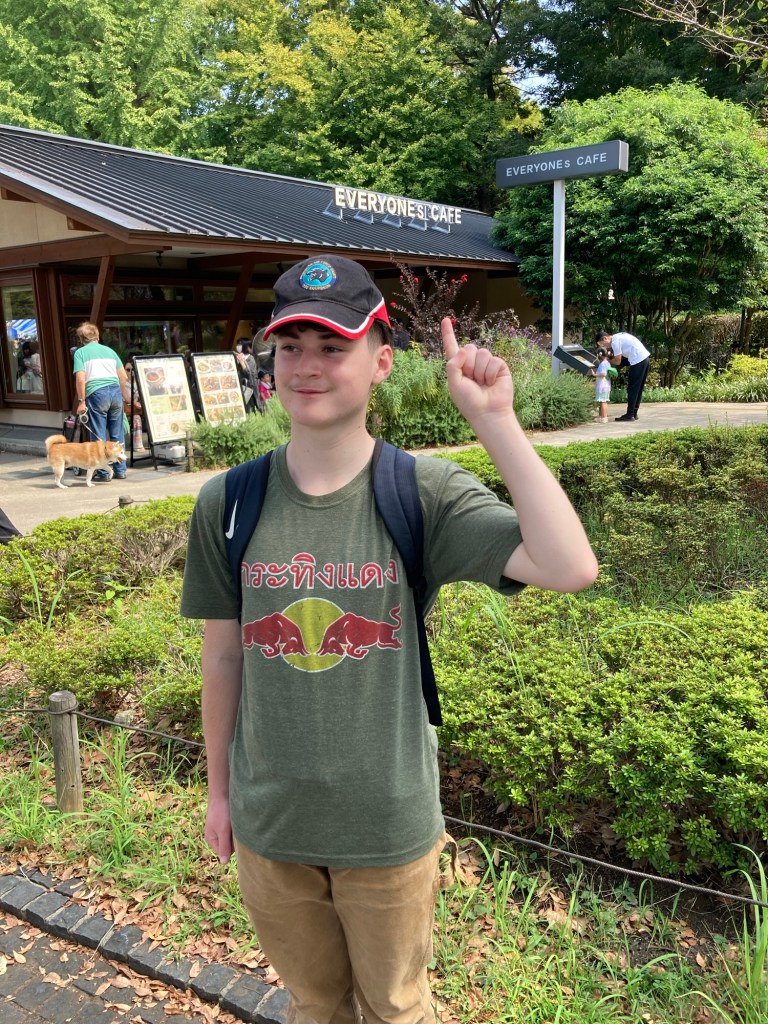
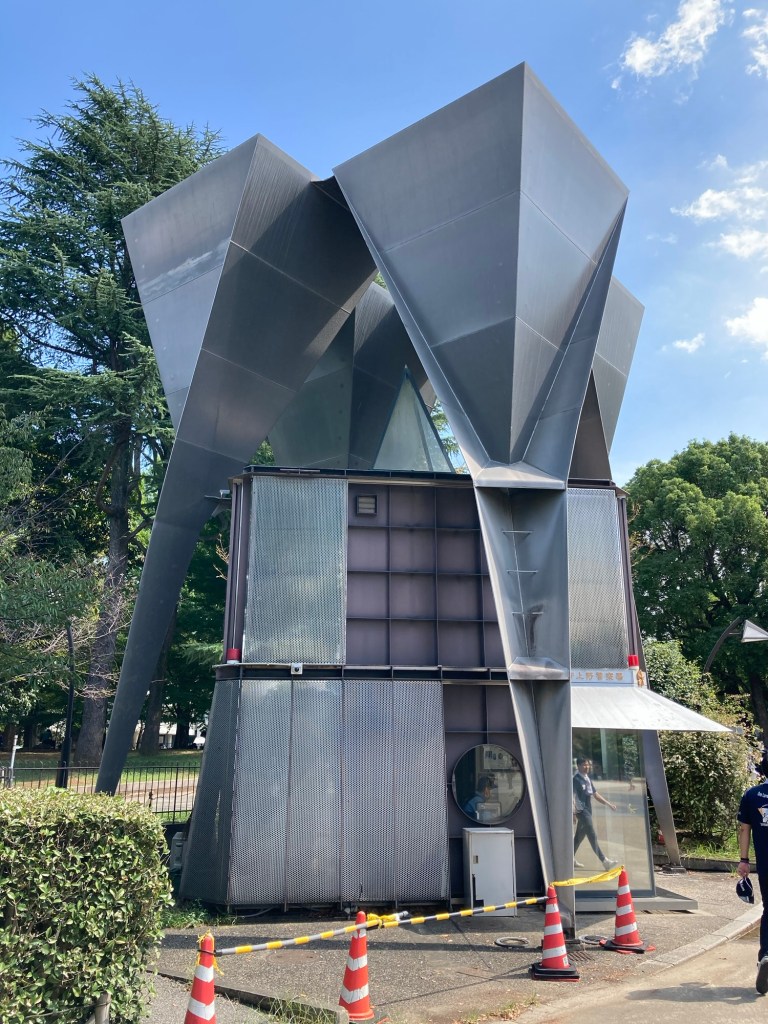
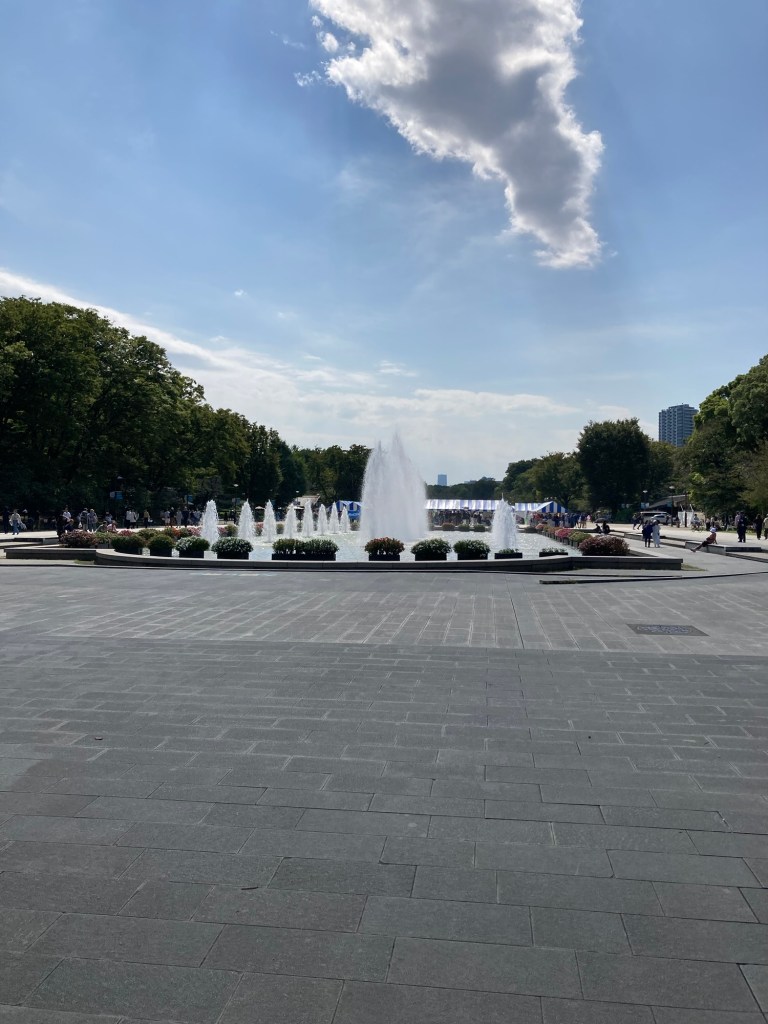
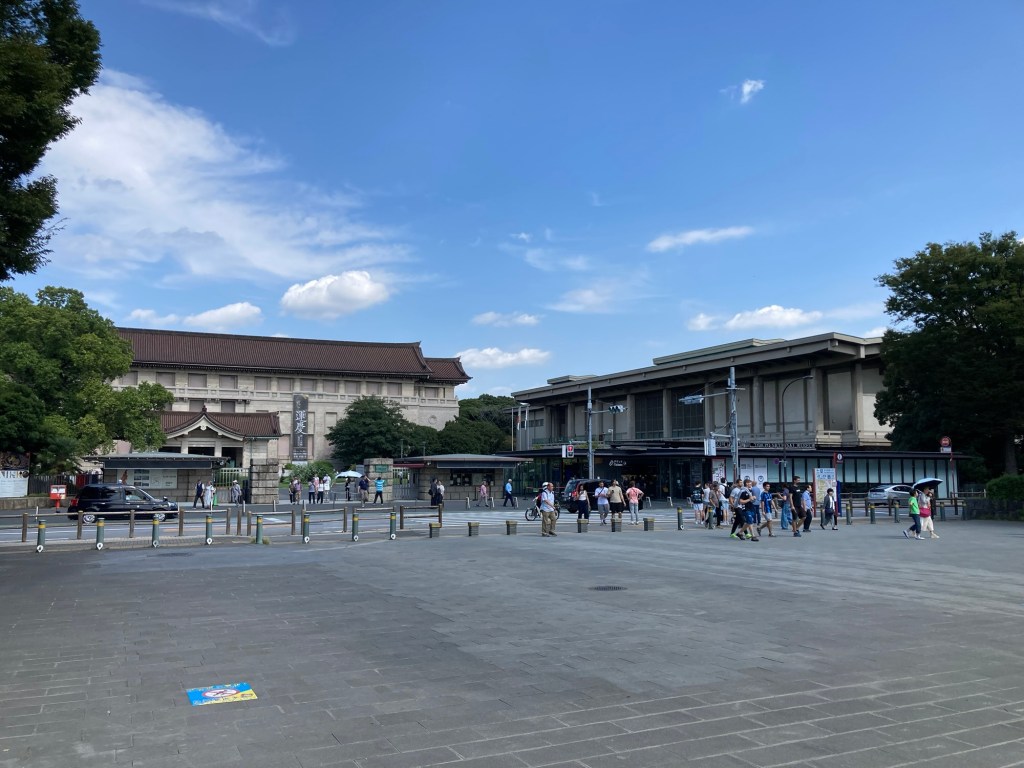
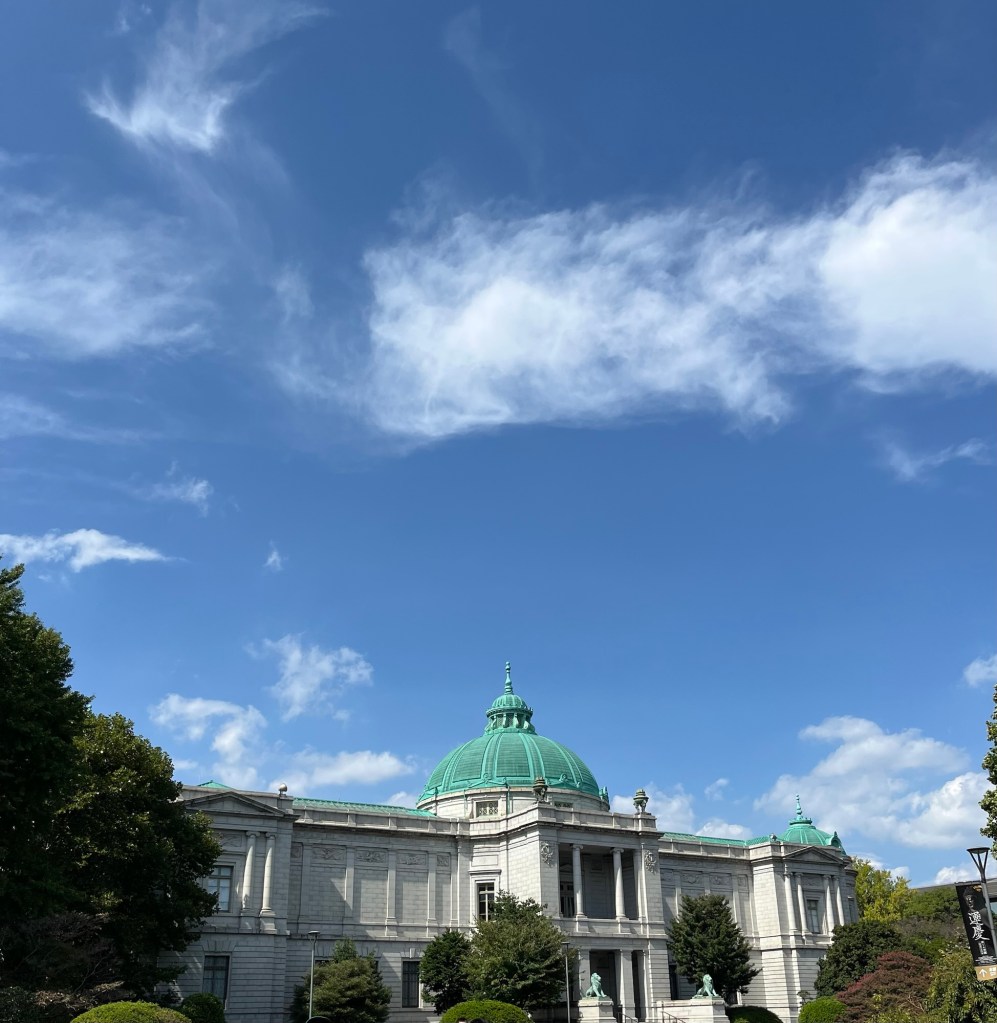
All of that we saw in the course of a ten minute walk, Ueno Park is really amazing. And we had now reached the Tokyo National Museum. The architecture of the museum buildings was very varied. The central courtyard of the complex was flanked by three quite different buildings. Opposite the entrance is the main building with a Japanese-style roof (apparently this is called the imperial crown style), to the right the Japan Collection is housed in a building that looked brutalist to me, and then on the left was a colonial style building with brass domes and lion statues at the steps.
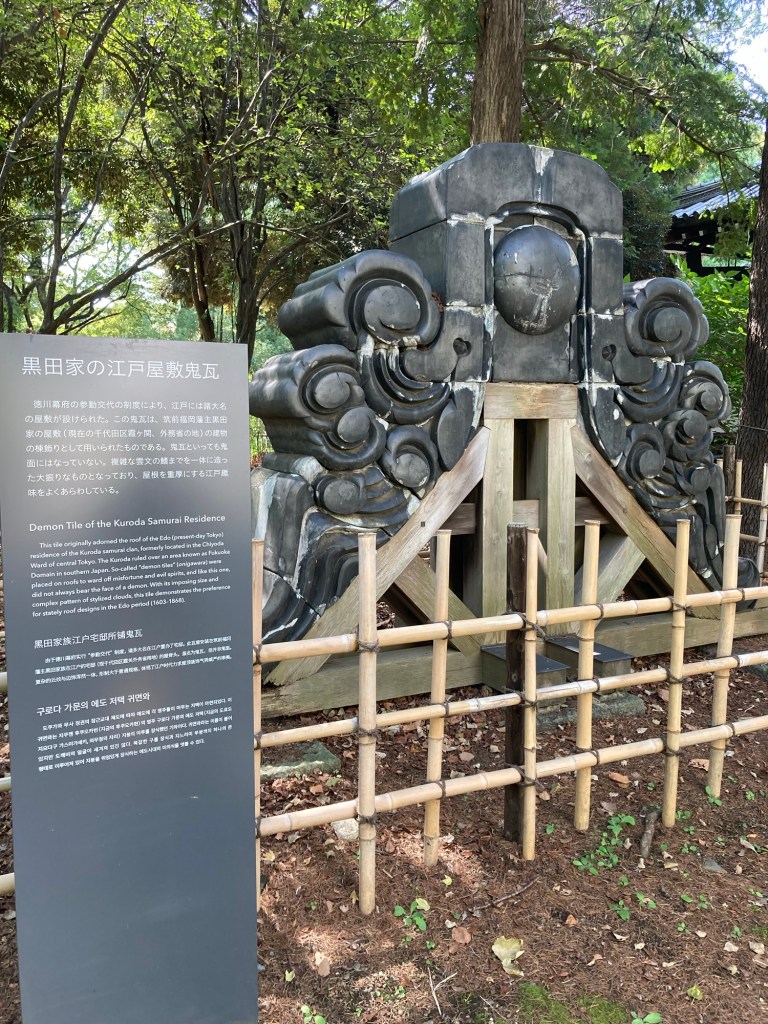
Felix and I noticed a sign for the Horyuji Treasures exhibition pointing down a path to the right of the colonial building, so we decided to start there. Along the path was displayed a “demon tile” which had once been on the roof of the local ruling Samurai clan residence.
Rounding a corner we came across yet another architectural style, I’m not sure what this is. International style? It was striking.
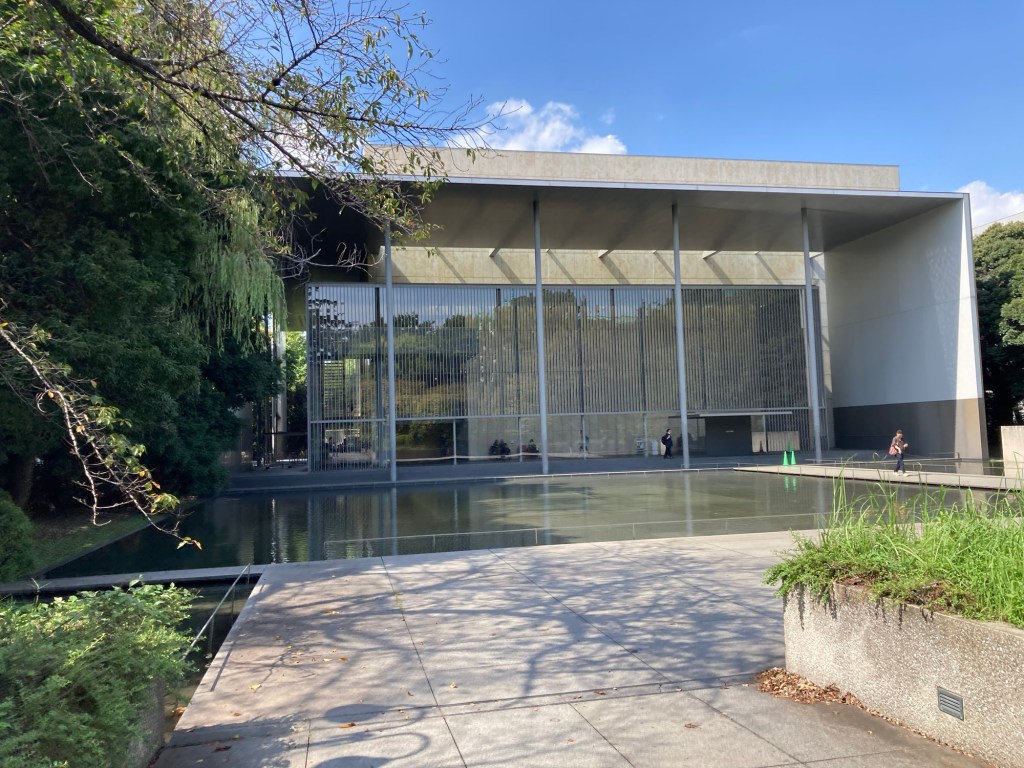
The Horyuji Treasures are a collection of religious objects from the 7th to 14th centuries. It includes statues, masks, banners and a range of other items.
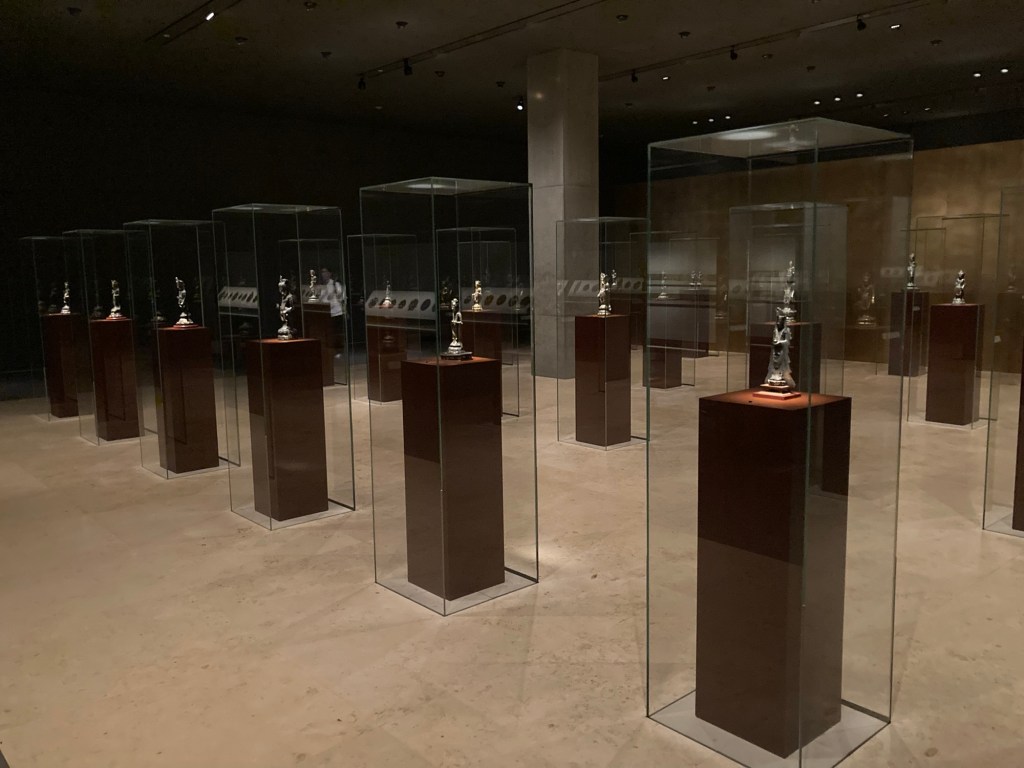
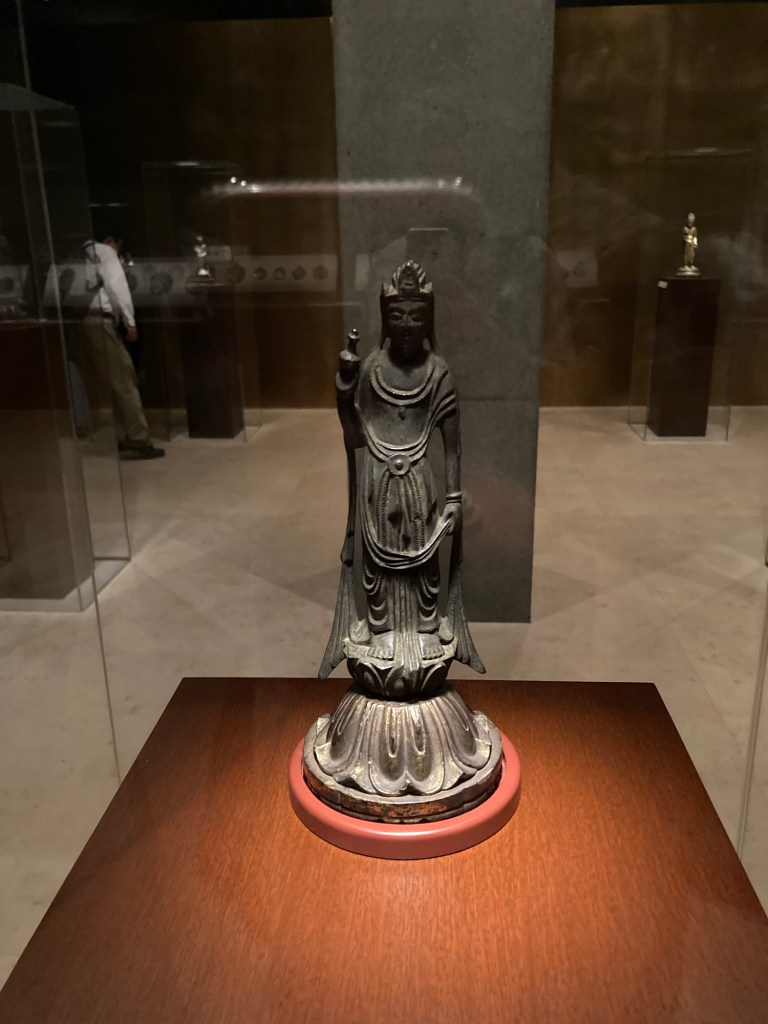
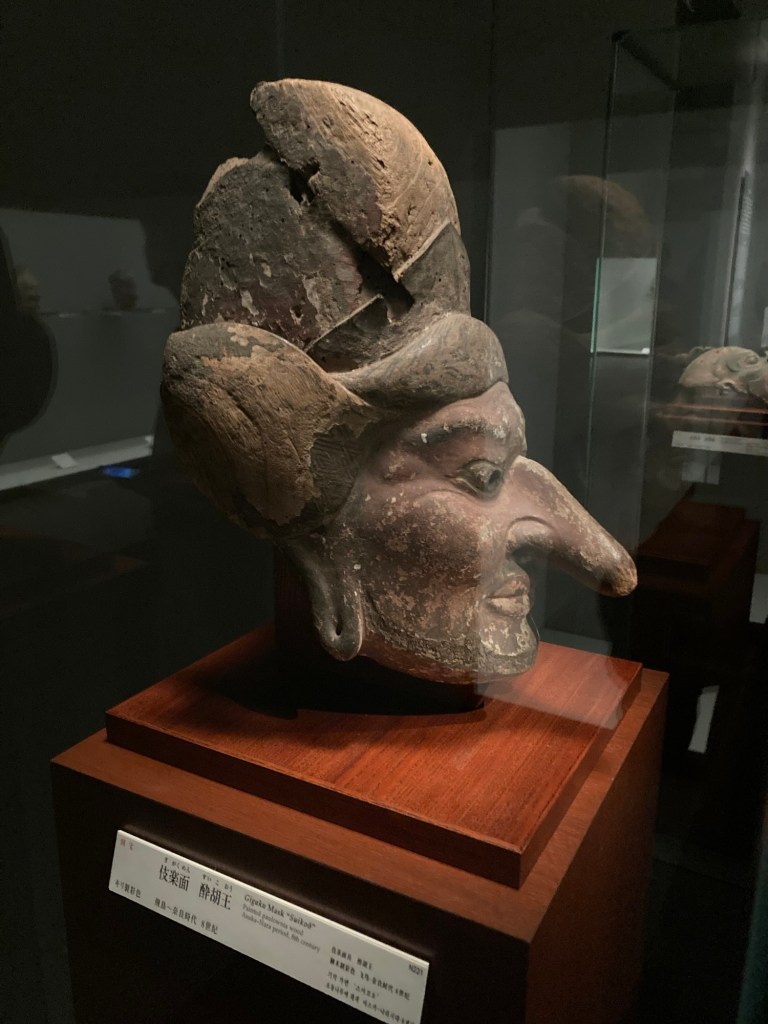
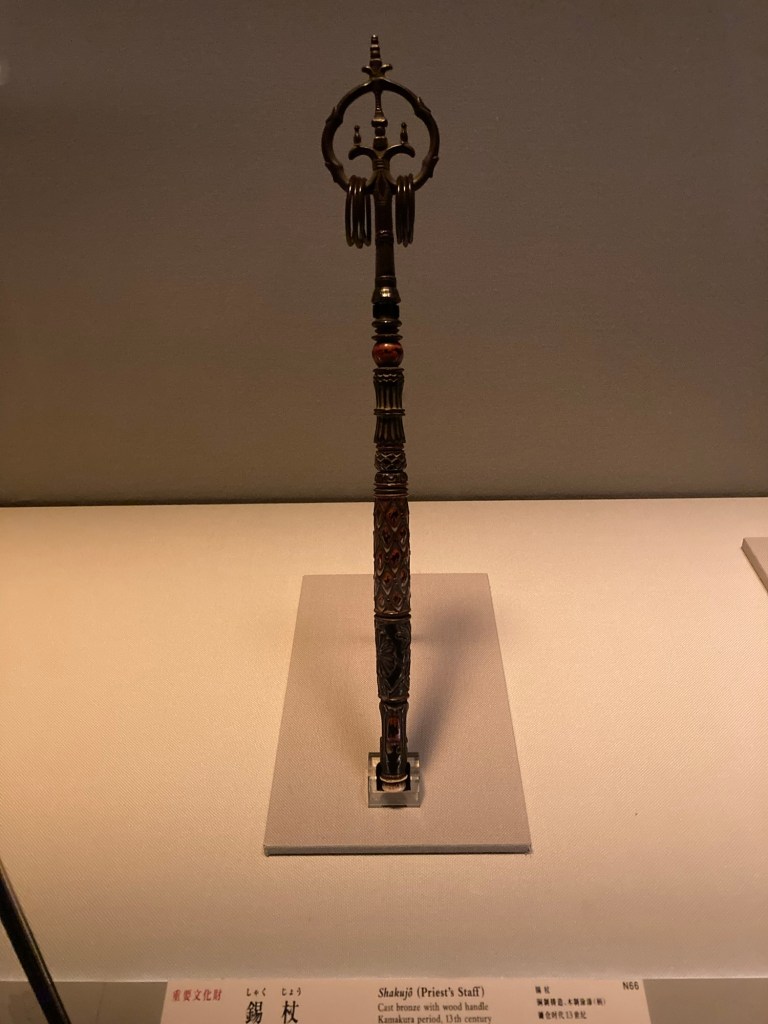
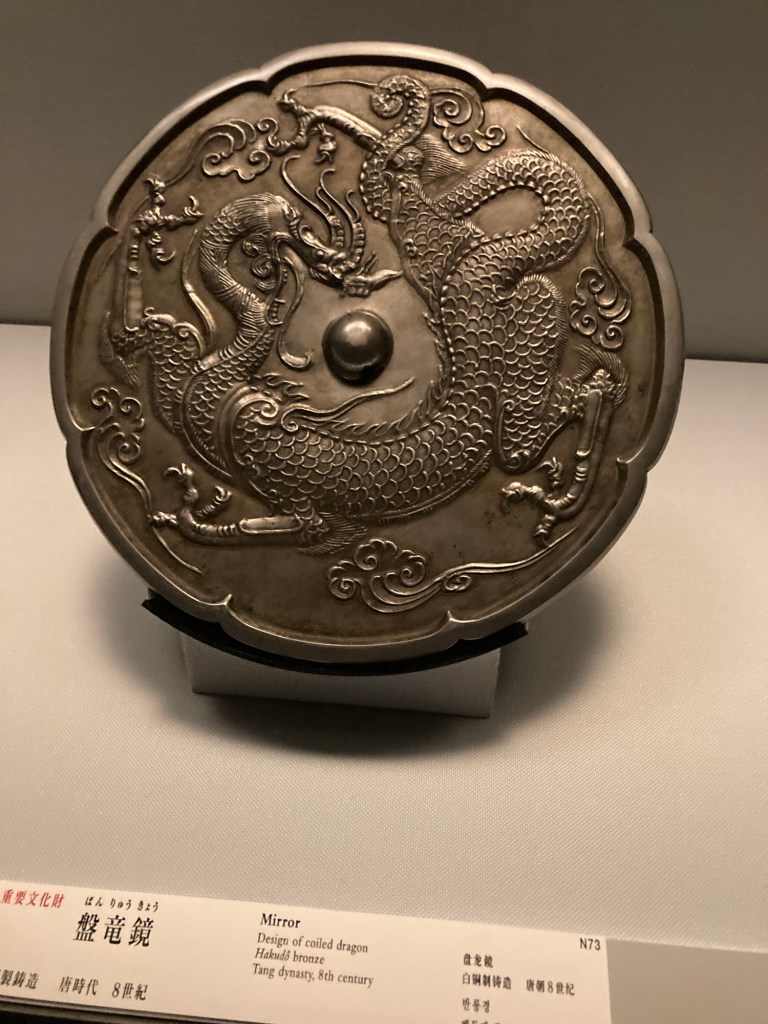
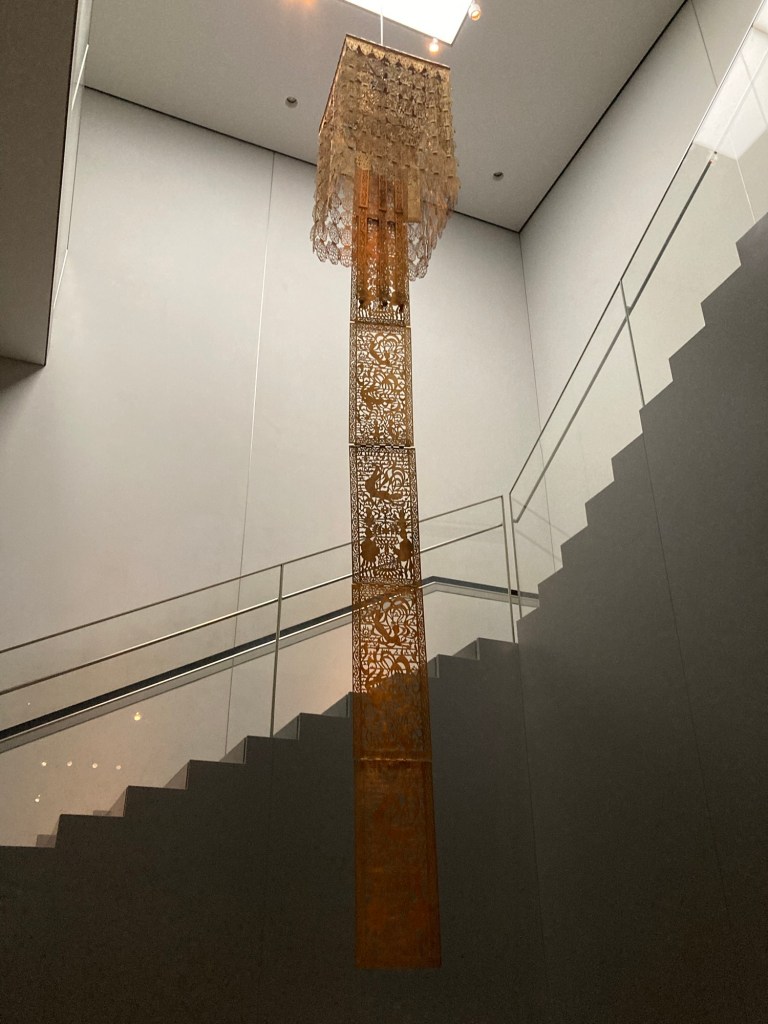
There wasn’t a lot of information given for individual items, but in some cases there were recreations of the objects which gave an insight into them. For example, this bronze banner:
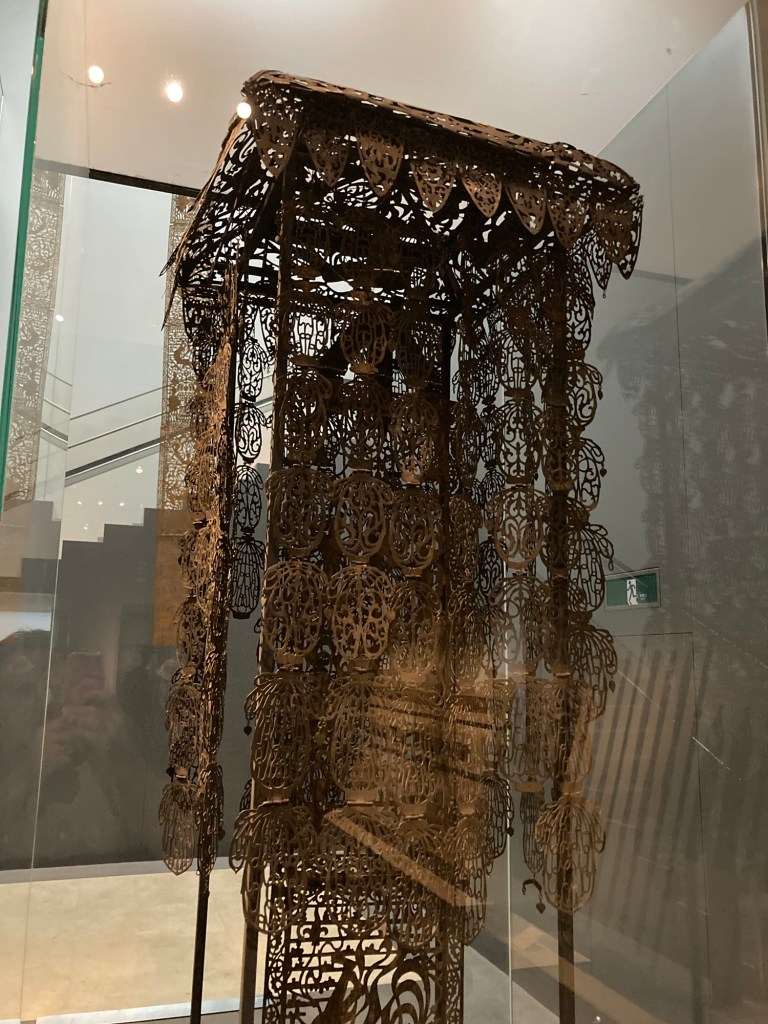
Would have looked like this when new:
Most interesting to me was how it showed contact with other cultures.
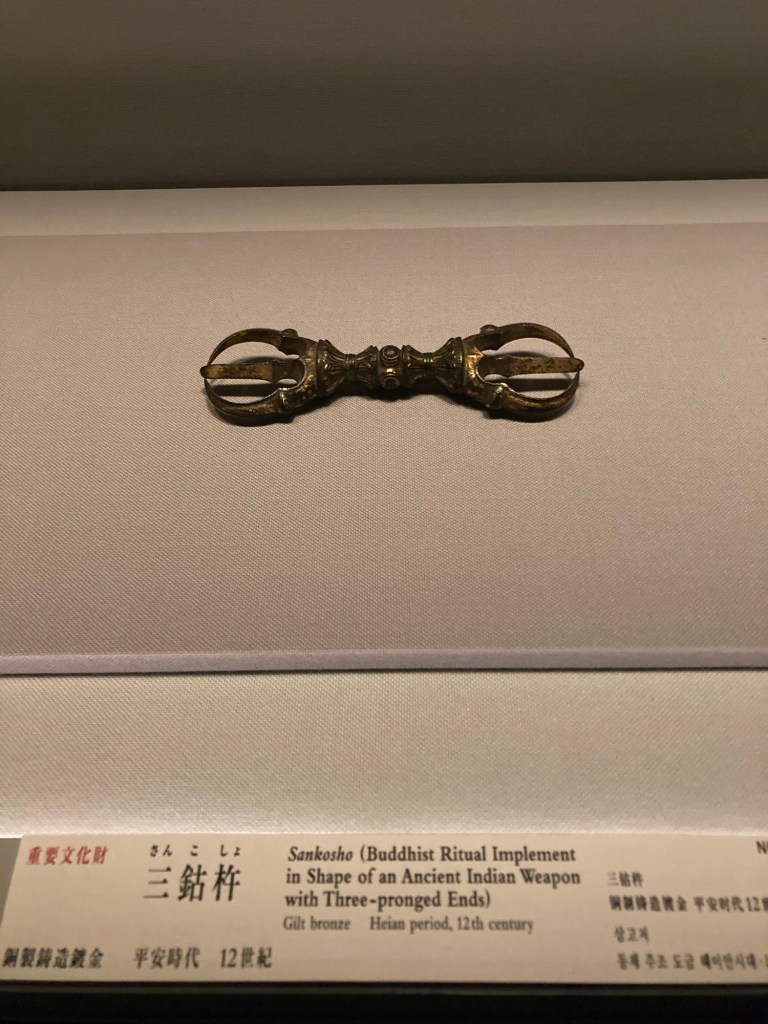
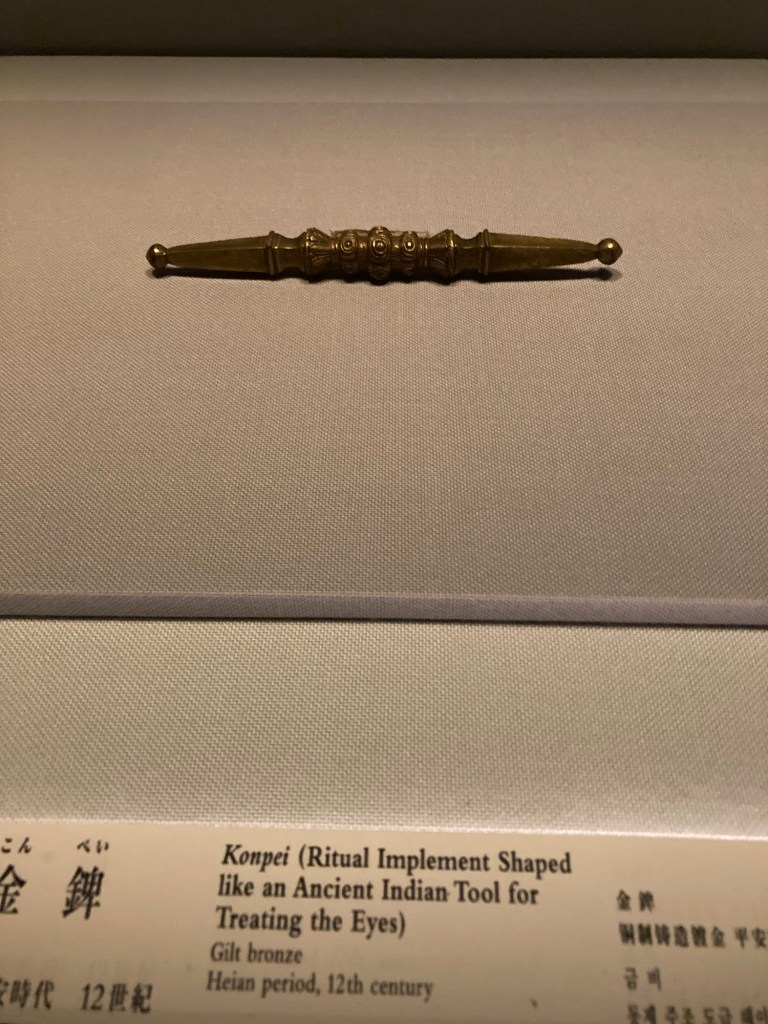
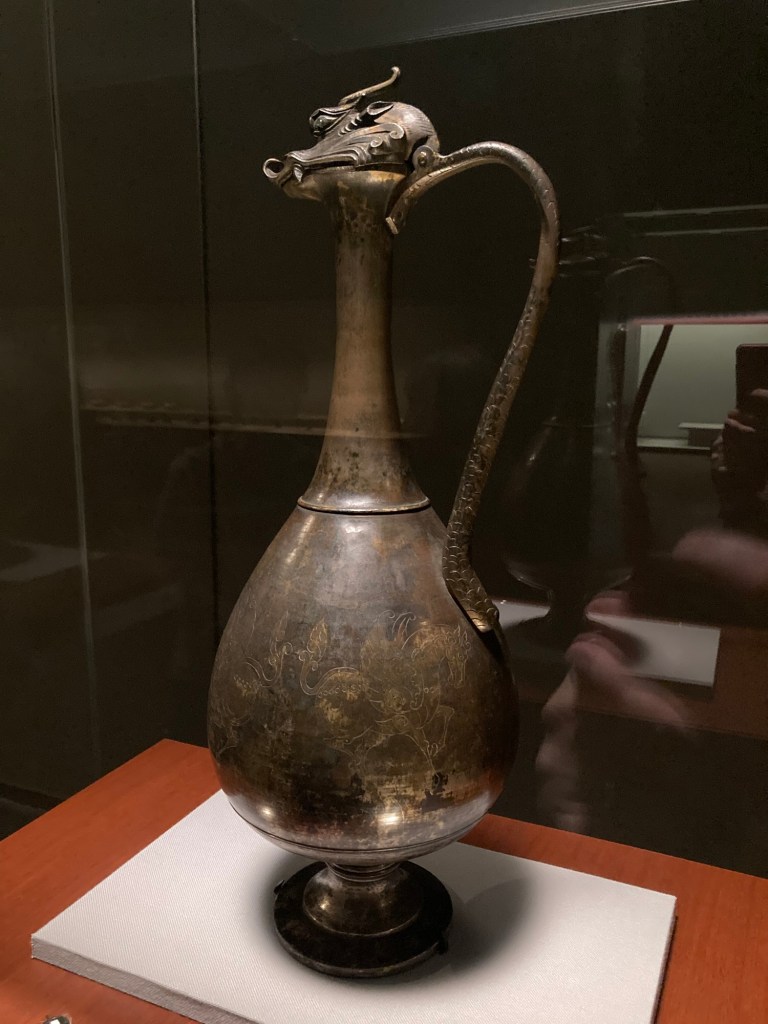
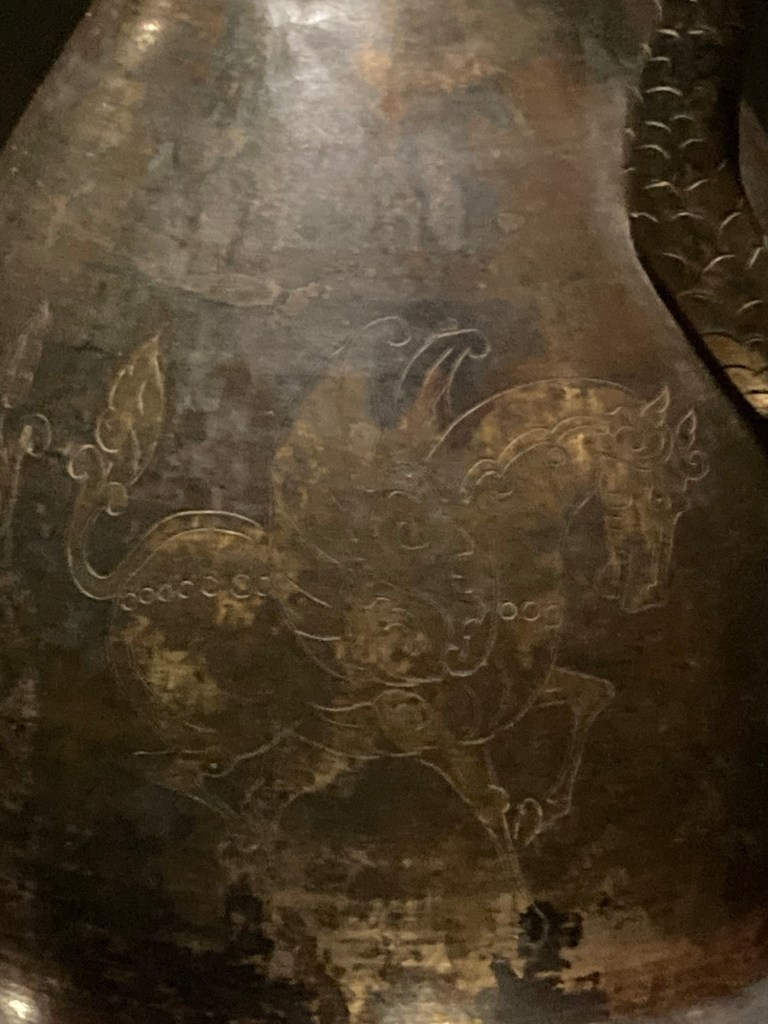
The pitcher with the dragon head above shows Persian influence in its depictions of horses.
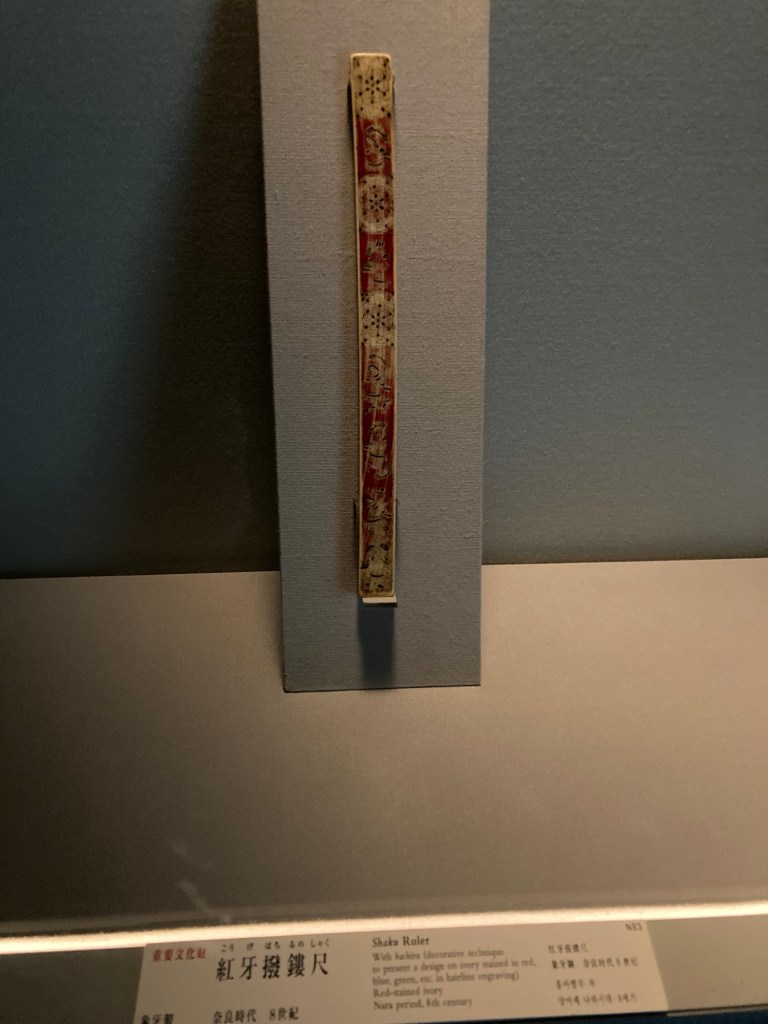
There was loads more, but including it all would make this post impossibly long (and I haven’t even got to the main collection). But I will include one final object that amused Felix and I. It was a ruler, and we found it mildly funny that it appears to be 30cm long.
We had a quick lunch at a cafe in the building, this reminded me of most museum cafe’s in that it sold nice food, but cafeteria-style like sandwiches, on fine China plates.
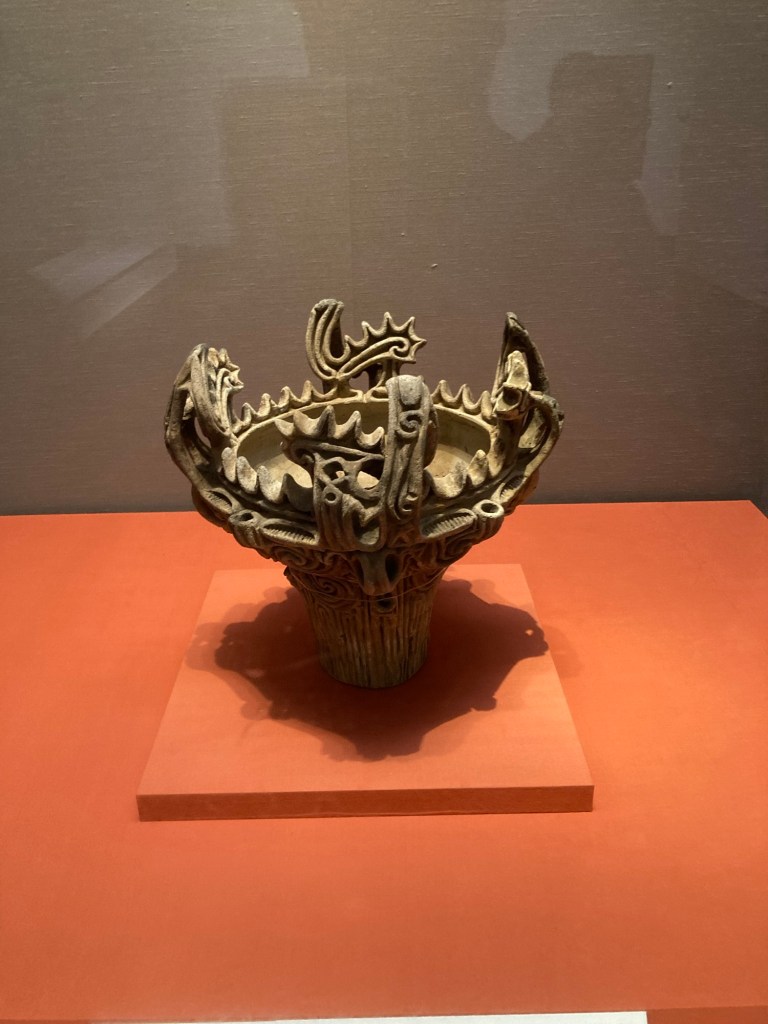
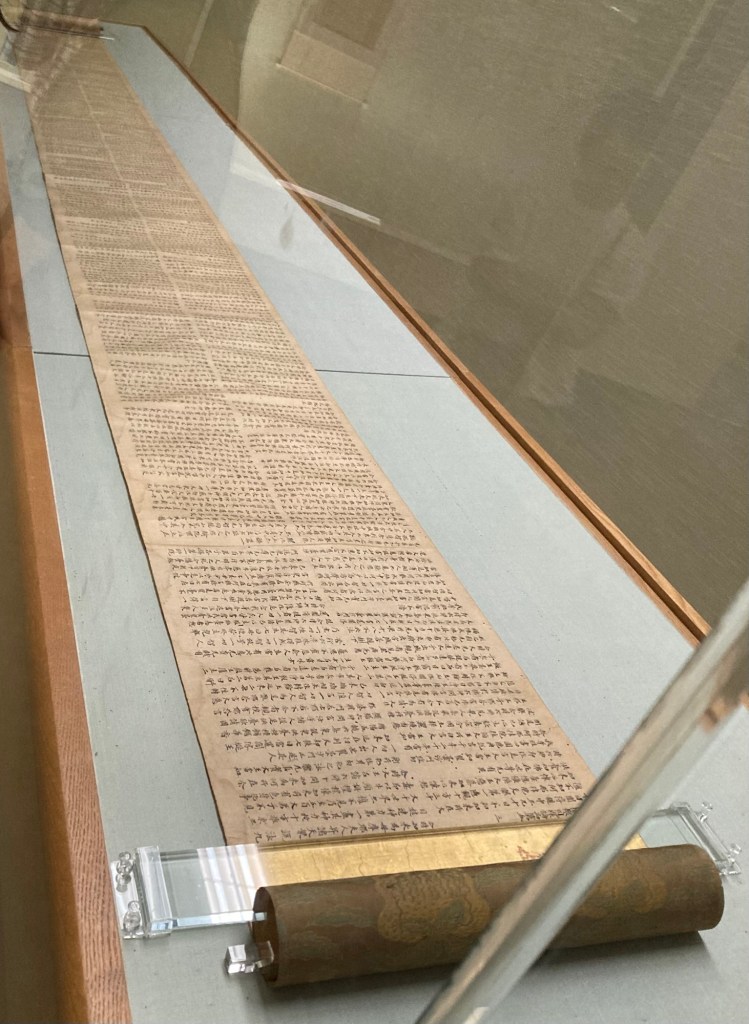
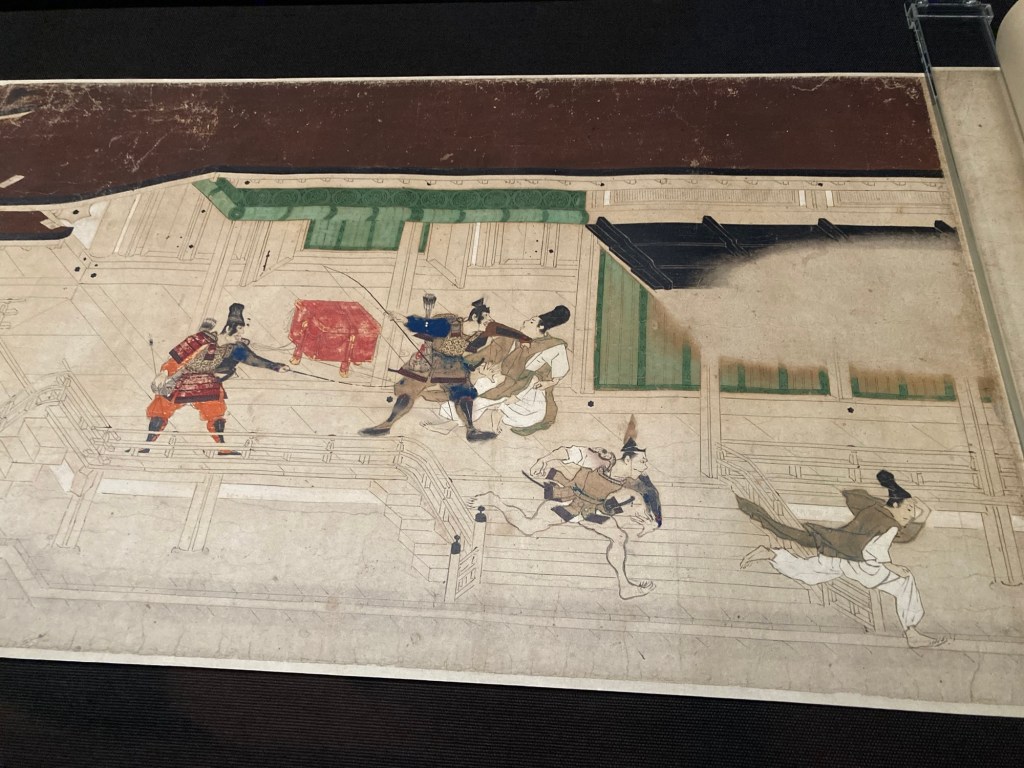
Next we headed back to the main collection. The building had about 20 different rooms and we only got through 6 in the time we had, but what we saw was brilliant. Again I can’t put in everything, but below is a sample.
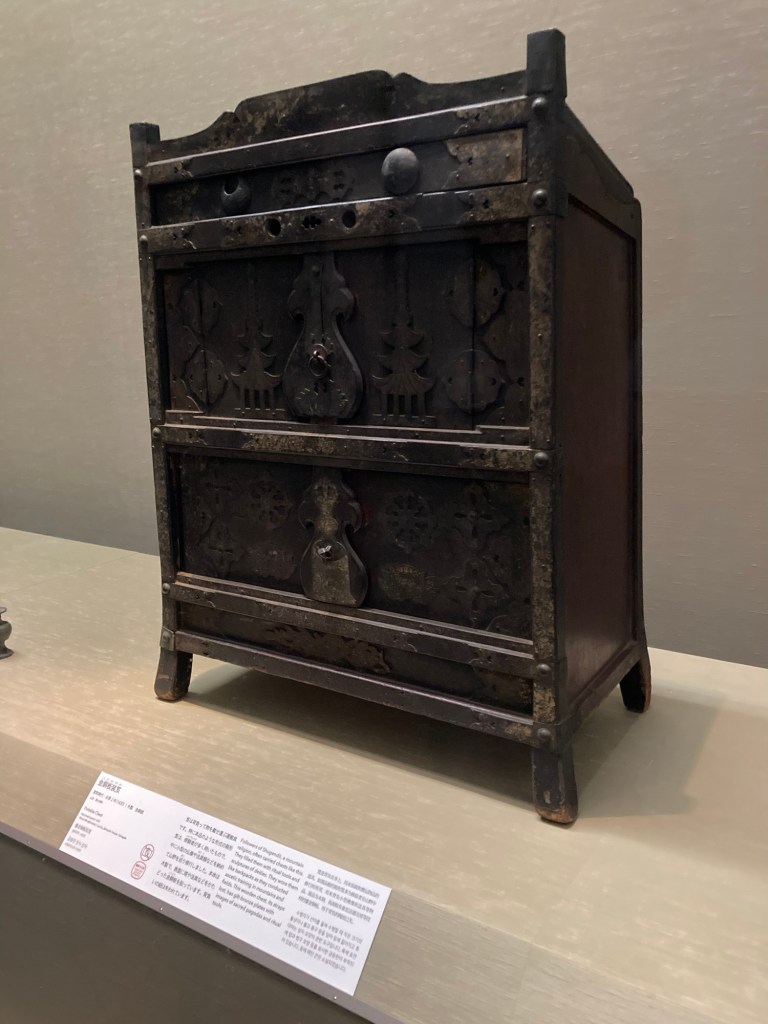
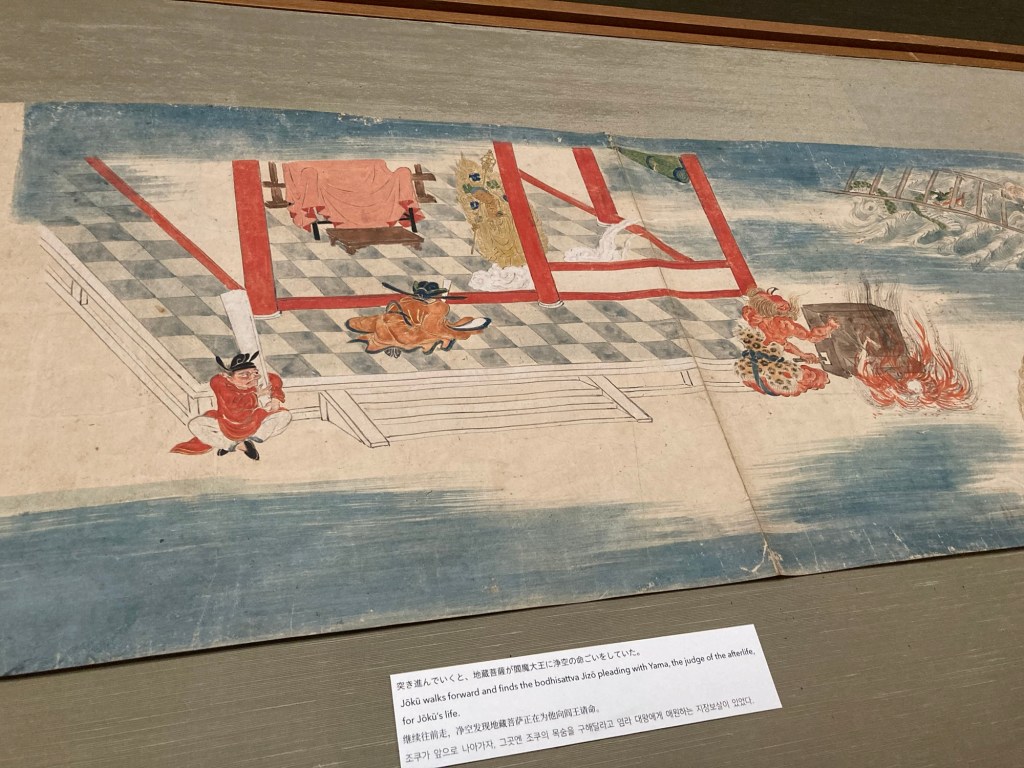
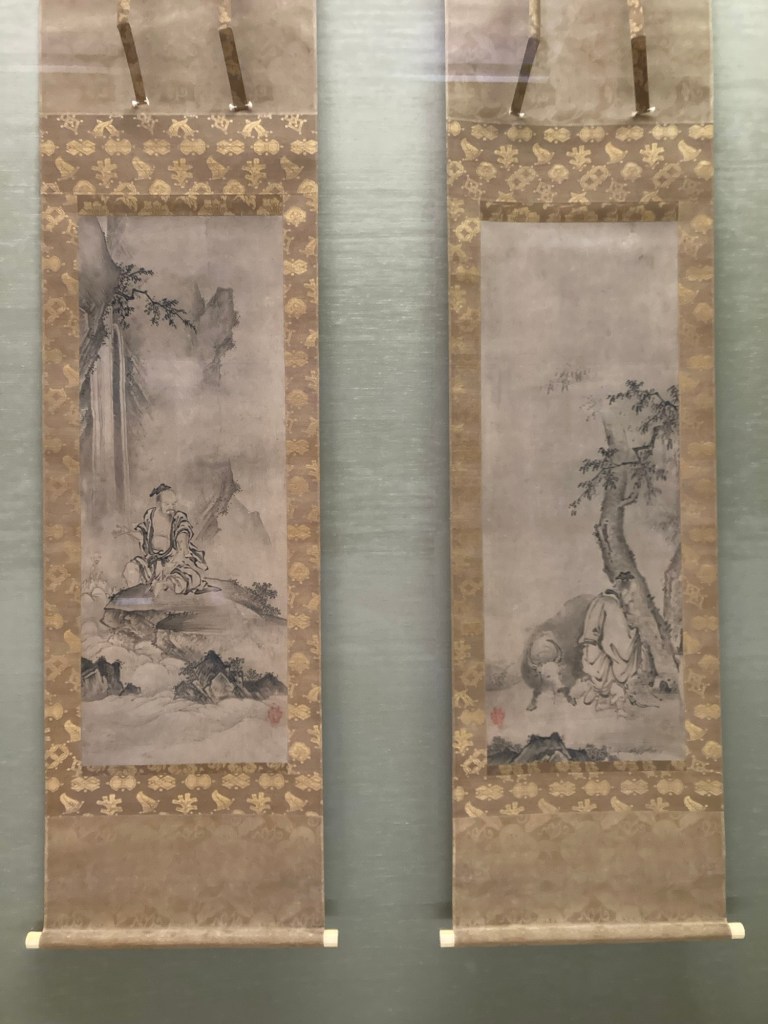
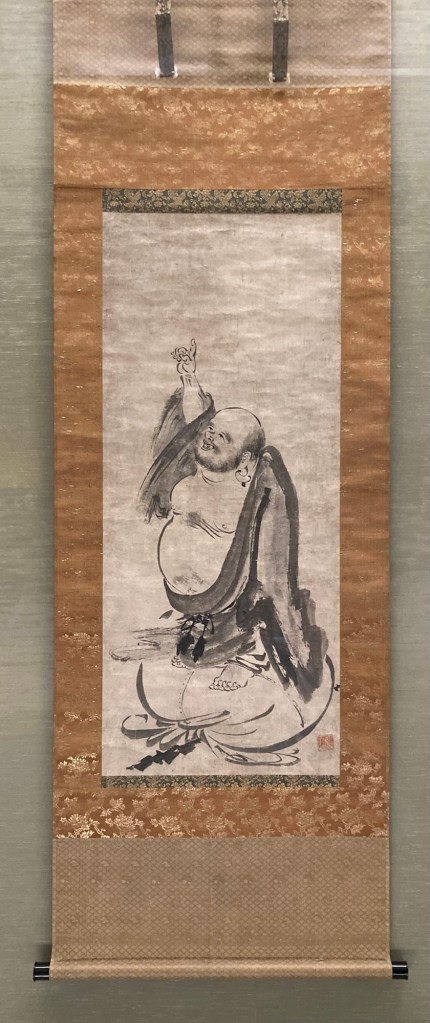
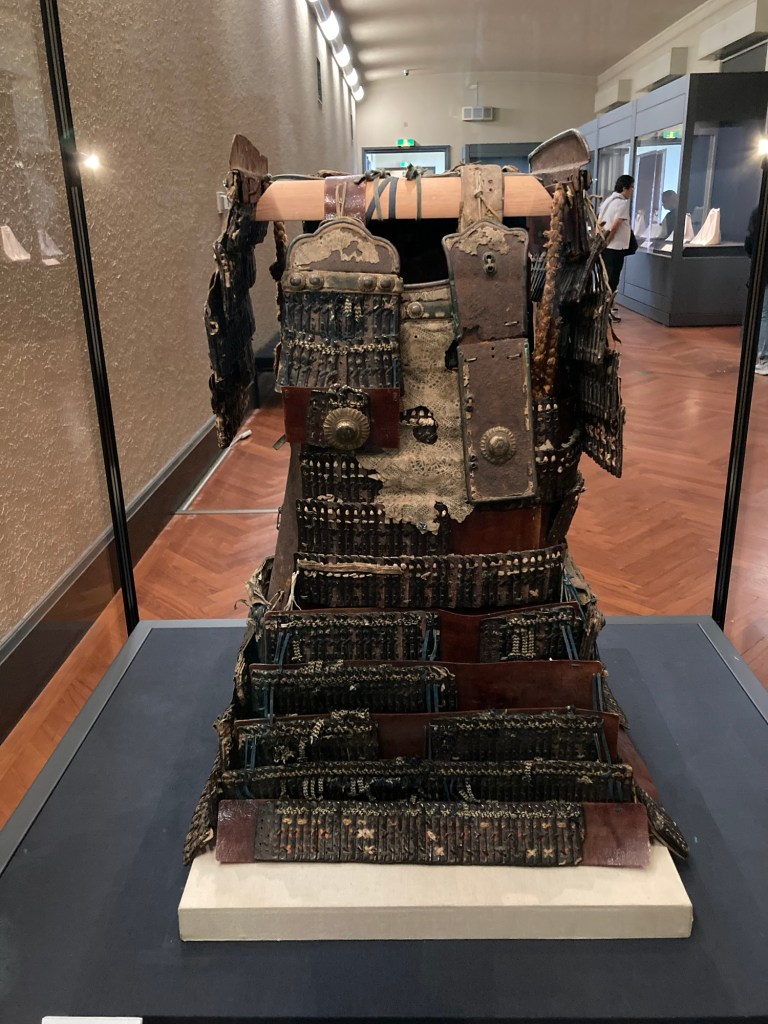
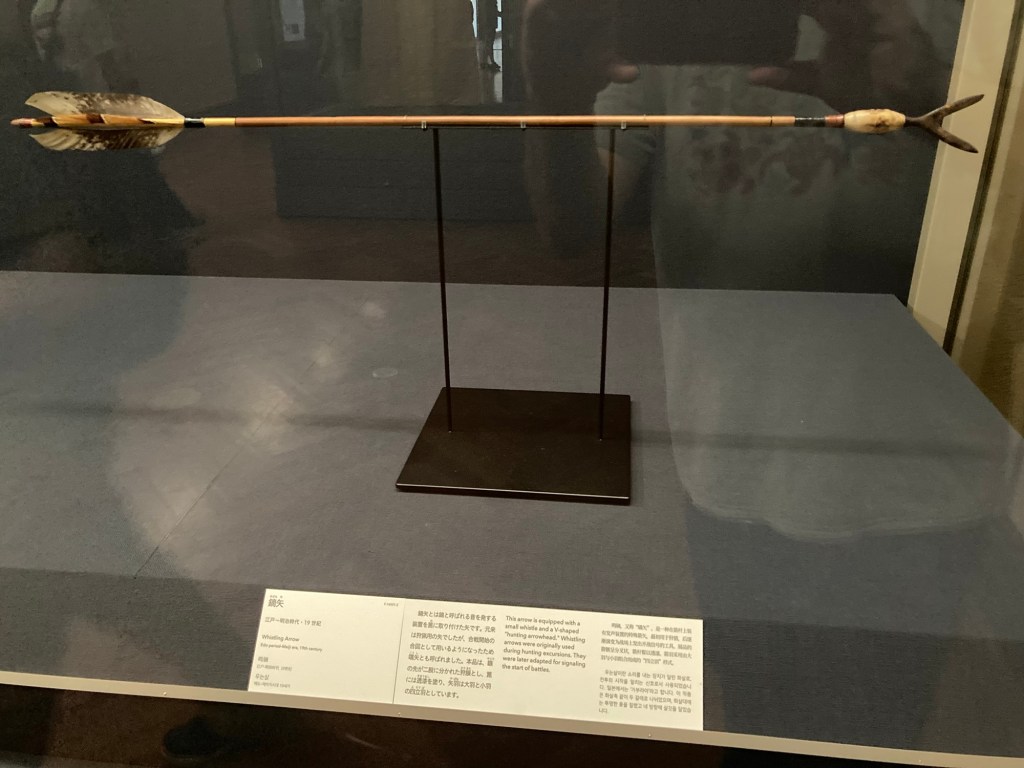
At this point we had been at the museum for hours and Hayley called to say they were finished with the zoo. So Felix and I reluctantly left to meet up with Hayley and Xavier at the Toshogu Shrine (which was also in Ueno Park). The path to the shrine is interesting with a large number of stone lanterns and animal statues.
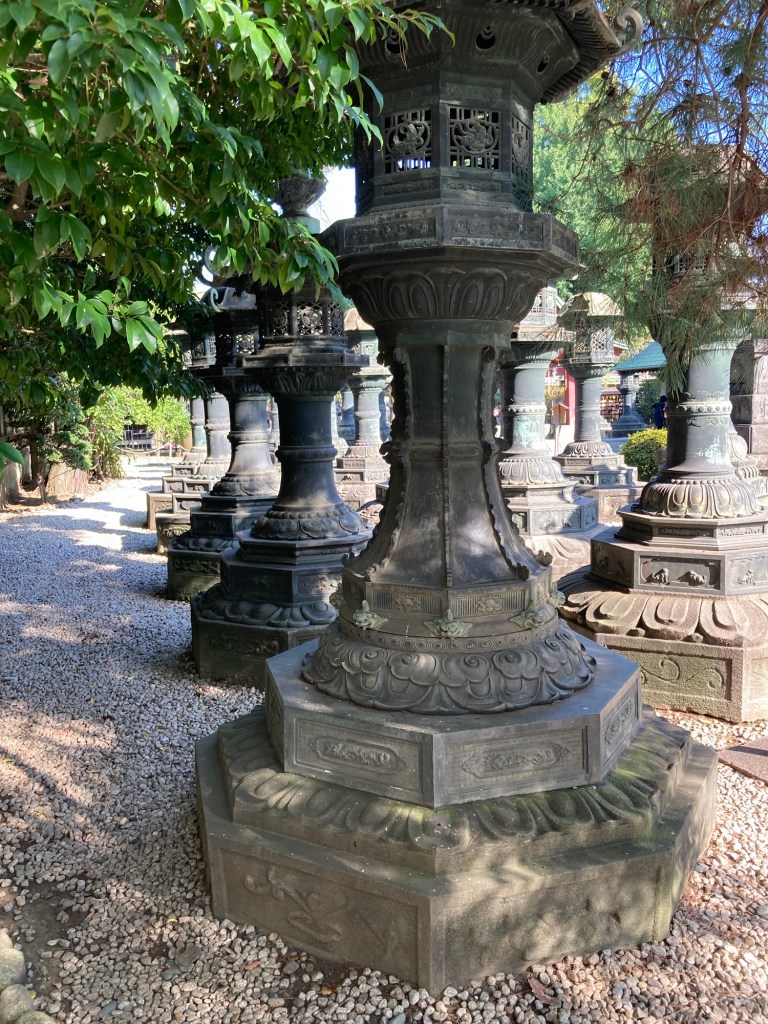
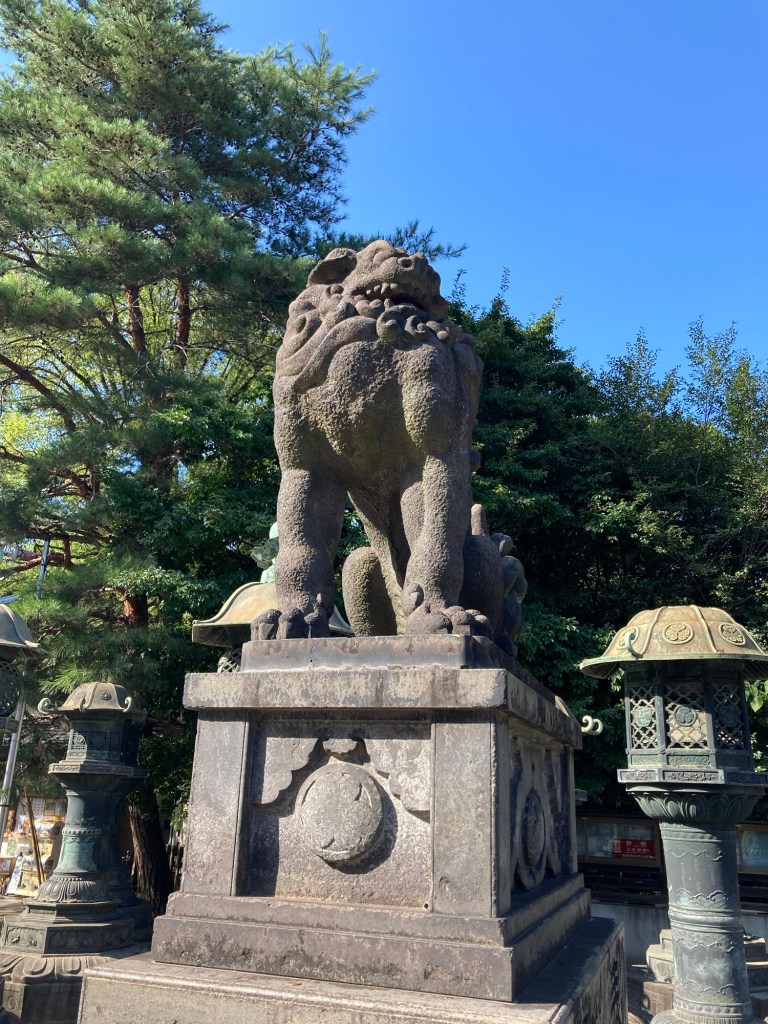
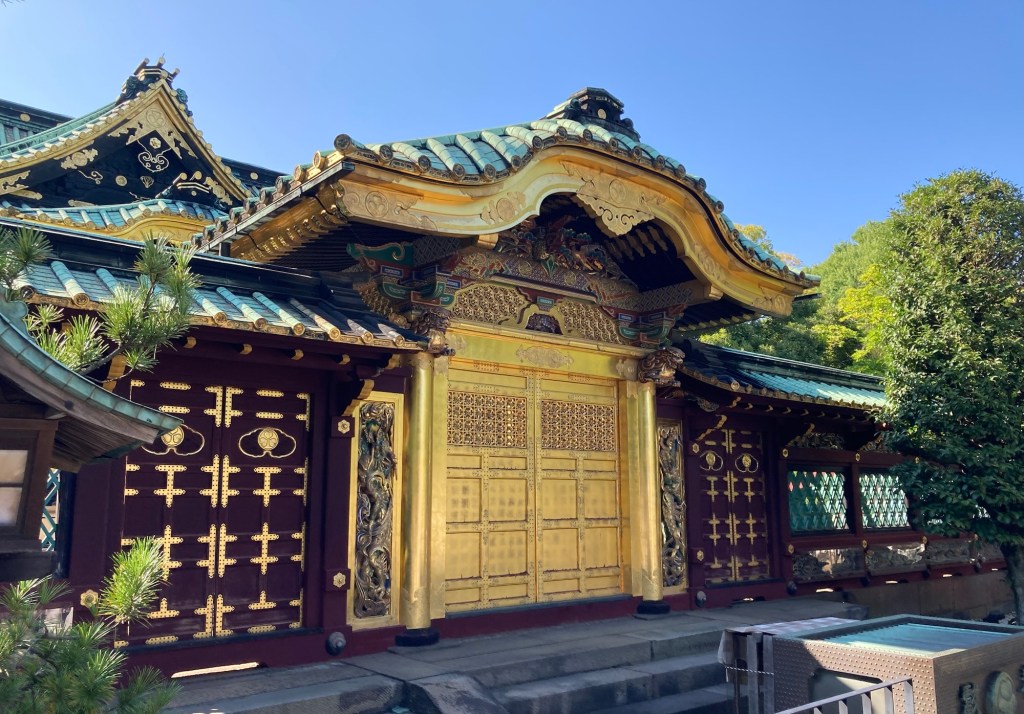
For a small fee we could enter the inner shrine area which was even more impressive.
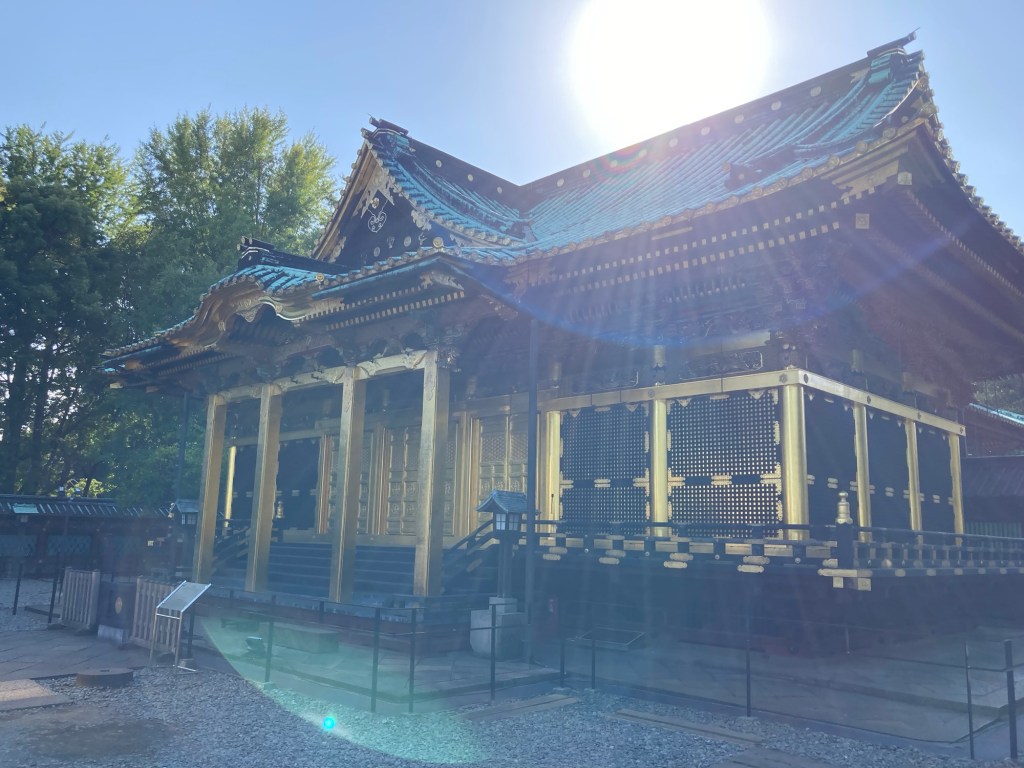
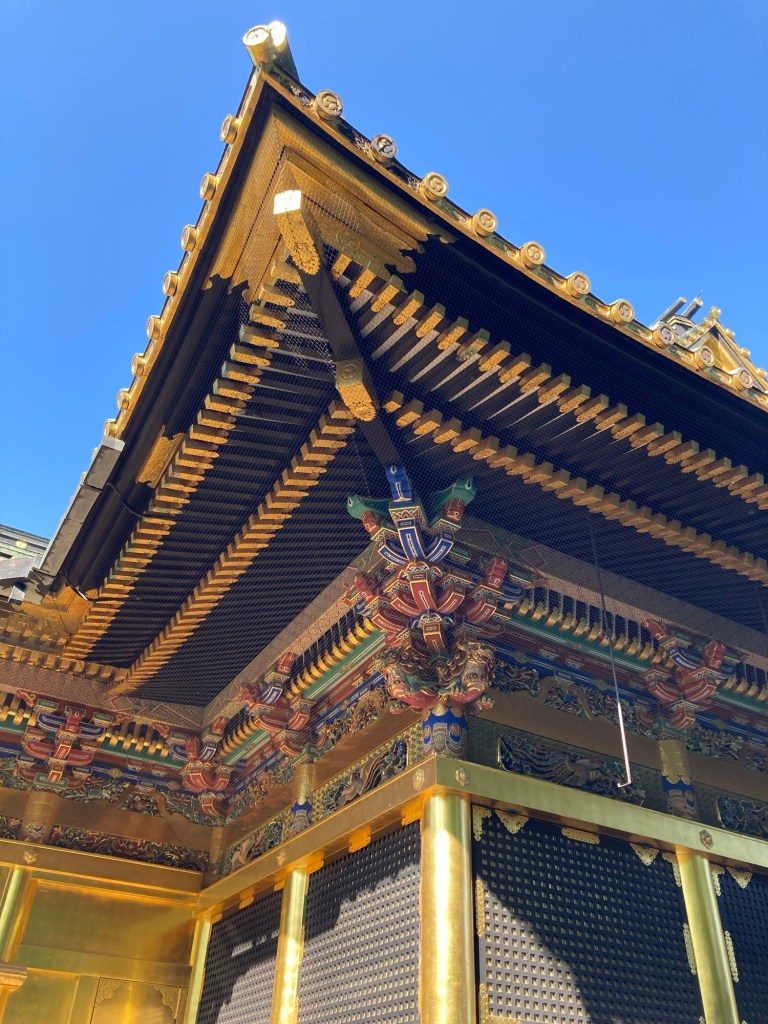
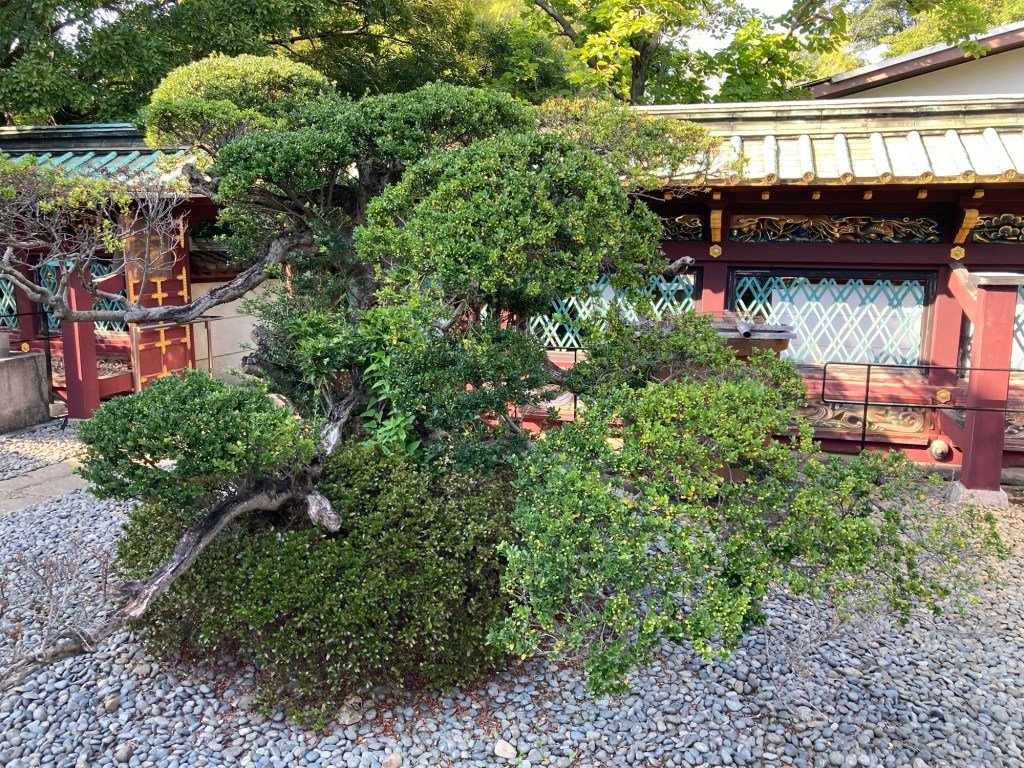
It was also very peaceful with doorways through to tucked-away gardens and alters.
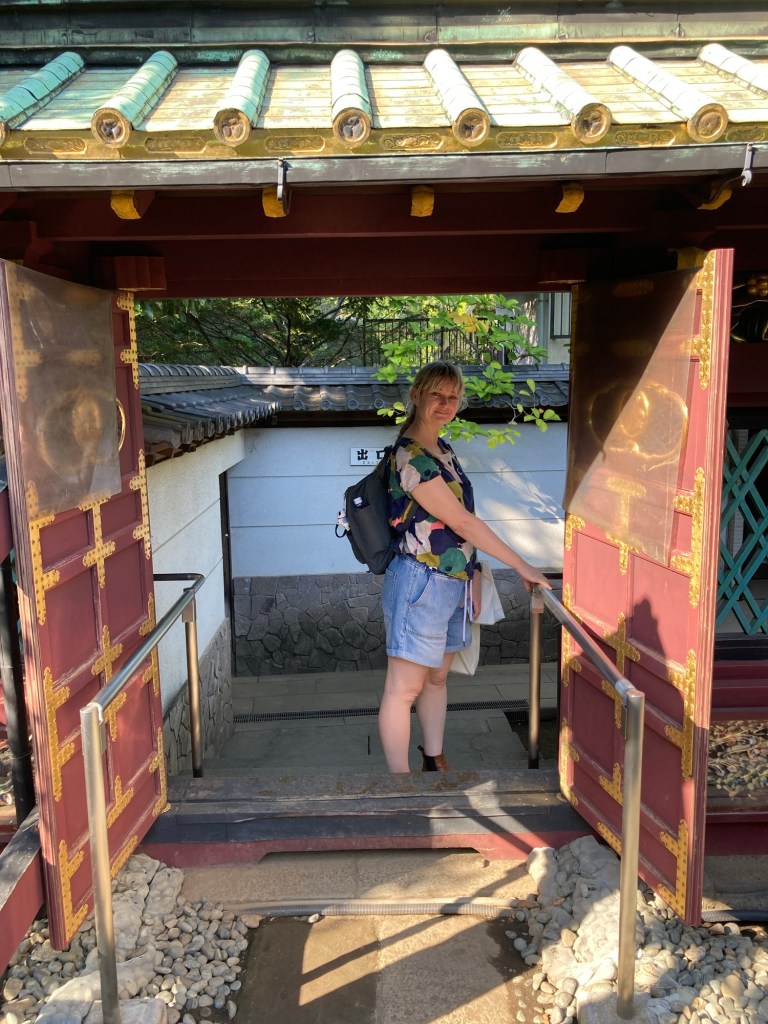
So that was quite a day, and all contained within Ueno Park. Besides the zoo, the museum, the shrine, and all the things we saw along the way, there are also a bunch of other parts of Uneno Park that we didn’t get to. It’s a huge and amazing place that you could easily spend days exploring.

 The Rolling Stone
Leave a comment